With 3 weeks in Thailand, you can combine Bangkok, the ancient capitals, northern temples and Andaman beaches in one trip—provided you plan your transfers carefully.
This 21-day itinerary covers each stop day by day, with transport options, places to stay, costs and seasonal alternatives.
Your 21-day Thailand itinerary at a glance
- Duration: 21 days and 20 nights.
- Route: Bangkok → Ayutthaya → Sukhothai → Chiang Mai → Chiang Rai → Phuket → Koh Lanta → Bangkok.
- Highlights: ancient temples, northern culture, historic cities, wildlife experiences and Andaman beaches.
- Best time: generally November to February for this combination of regions, with seasonal variations.
- Estimated budget: €900–€1,200 for a very economical trip, or around €1,800–€2,500 per person for a more comfortable stay, excluding international flights.
- Travel style: an active itinerary for travellers who enjoy discovering several regions.
21-day Thailand itinerary: Route and overnight stops
This route begins in Bangkok, follows Thailand’s historical heartland northwards and finishes with several days on the Andaman coast. It includes more transfers than a typical two-week holiday, so some days are deliberately reserved for travelling.
| Days | Destination | Nights | Main highlights |
|---|---|---|---|
| 1–3 | Bangkok | 3 | Royal temples, canals and markets |
| 4 | Ayutthaya | 1 | Historic temples and royal ruins |
| 5–6 | Sukhothai | 2 | UNESCO-listed historical park |
| 7–10 | Chiang Mai | 4 | Lanna temples, mountains and culture |
| 11–12 | Chiang Rai | 2 | White Temple and Golden Triangle |
| 13–14 | Phuket | 2 | Beaches and Phi Phi Islands |
| 15–18 | Koh Lanta | 4 | Quiet beaches and island excursions |
| 19–21 | Bangkok | 2 | Final sightseeing and departure |
If you have less time or prefer fewer hotel changes, see our 14-day Thailand itinerary, which focuses on three main destinations.
Days 1–3: Bangkok — temples, markets and canals
Begin in Bangkok, where historic temples, riverside neighbourhoods, markets and modern districts offer an introduction to the country. Three days are enough to visit the main attractions without trying to cover the entire city.

Day 1: Arrival and your first evening in Bangkok
After landing at Suvarnabhumi Airport (BKK) or Don Mueang Airport (DMK), transfer to your hotel and leave some time to recover from the journey. Airport procedures and Bangkok traffic can take longer than expected.
Spend your first evening exploring the neighbourhood, sampling Thai street food or relaxing beside the river. A rooftop bar can be an enjoyable option if you still have energy, but there is no need to schedule a major attraction immediately after arriving. If you want mobile data as soon as you land, compare your options in our Thailand eSIM guide.
Day 2: Grand Palace, Wat Pho and Wat Arun
Start at the Grand Palace and Wat Phra Kaew, home to the revered Emerald Buddha. Continue to Wat Pho to see its enormous Reclining Buddha, then cross the Chao Phraya River to visit Wat Arun, famous for its decorated central prang.
These attractions can be combined in one day, although the heat, queues and walking distances should not be underestimated. Begin early, carry water and wear clothing that covers your shoulders and knees.
For more sightseeing ideas and neighbourhood information, consult our Bangkok travel guide.
Day 3: Floating market and Bangkok’s canals
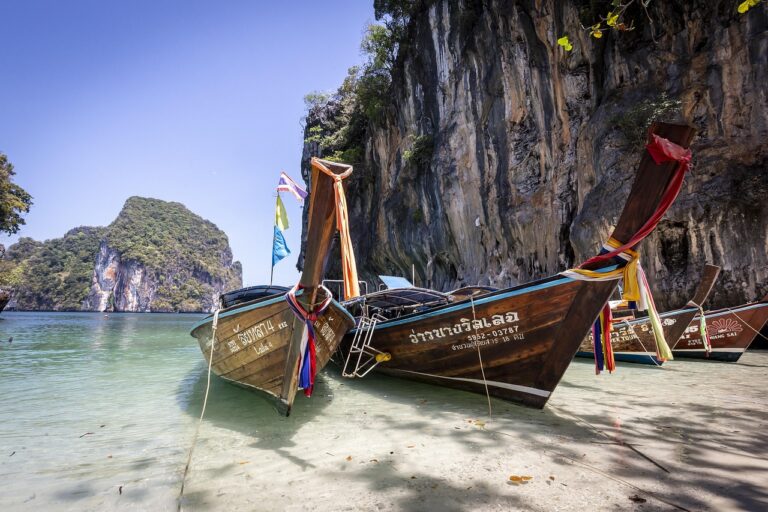
Discover another side of Bangkok with a long-tail boat ride along the khlongs, the city’s traditional canals. The journey offers glimpses of riverside houses, small temples and everyday life away from the busiest streets.
You can also visit a floating market. Khlong Lat Mayom and Taling Chan are convenient options on their operating days, while Damnoen Saduak and Amphawa require a longer excursion outside Bangkok. Check opening days before leaving, as some markets operate mainly at weekends.
Where to stay in Bangkok: Sukhumvit is convenient for BTS connections, while the Riverside and Old Town areas offer easier access to historic attractions. Examples across different budgets include The Yard Hostel, Riva Arun Bangkok and The Peninsula Bangkok. Compare their current rates and locations before booking.
Day 4: Ayutthaya — the former capital of Siam
Travel north to Ayutthaya, one of Thailand’s most important historical destinations. Founded in 1350, the city became the capital of a powerful kingdom before its destruction in 1767. Its surviving temples and monuments form part of a UNESCO World Heritage Site.

Day 4: Travel from Bangkok and explore the temples
Ayutthaya is approximately 80 kilometres north of Bangkok. Trains, buses and private transfers connect the two cities, with journeys commonly taking around 1 to 2 hours depending on the service and departure point.
Once there, explore Wat Mahathat, known for the Buddha head surrounded by tree roots, followed by Wat Phra Si Sanphet and Wat Ratchaburana. Cycling is a popular way to explore, although a tuk-tuk or hired driver may be more comfortable during very hot weather.
Spend the night in Ayutthaya rather than attempting a late transfer to Sukhothai. The next stage involves a substantial journey, and an overnight stop gives you more time among the ruins.
Where to stay: Look for accommodation close to the historical park. Plus Hostel Ayutthaya, Sala Ayutthaya and Baan Pomphet are examples at different comfort levels.
Days 5–6: Sukhothai — ancient temples and Thai heritage
Sukhothai is associated with one of the earliest major Thai kingdoms. Its historical park is known for elegant Buddha statues, lotus ponds and temple ruins spread across a peaceful landscape. For context on Sukhothai, Ayutthaya and Lanna, read our history of Thailand.

Day 5: Travel to Sukhothai
Allow much of the day to reach Sukhothai from Ayutthaya. Depending on the available services, you may travel by road or take a train to Phitsanulok followed by a bus or minivan. The complete journey can take approximately 6 to 8 hours or longer when connections are involved.
After arriving, settle into your accommodation. If you reach the historical park early enough, enjoy a short introductory walk or cycle ride. Otherwise, save the main sightseeing for the next morning.
Day 6: Explore Sukhothai Historical Park
Rent a bicycle near the entrance and explore the central zone of Sukhothai Historical Park. Wat Mahathat is one of the most impressive monuments, while Wat Si Sawai and other nearby temples reveal different architectural styles.
With additional time, visit the quieter northern and western zones. Some sites are spread far apart, so consider the heat and distances when choosing your route.
Stay a second night in Sukhothai. This avoids rushing the park visit and allows you to leave for Chiang Mai the following morning.
Where to stay: Accommodation near Old Sukhothai is convenient for the park. Examples include Vitoon Guesthouse, Legendha Sukhothai Hotel and Sriwilai Sukhothai.
Days 7–10: Chiang Mai — temples, food and mountain scenery
Chiang Mai combines the heritage of the former Lanna kingdom with lively markets, traditional cuisine and access to the northern mountains. Four nights give you time for its principal sights and a selection of local experiences.
Day 7: Travel to Chiang Mai and discover the Old City
Take a bus or private transfer from Sukhothai to Chiang Mai. Road journeys commonly take around 5 to 6 hours, sometimes longer depending on the route and stops.
After checking in, explore the Old City if time permits. Wat Chedi Luang and Wat Phra Singh are among its best-known temples. In the evening, try northern Thai dishes such as khao soi or visit the Night Bazaar.
Our Chiang Mai travel guide covers the main temples, markets, neighbourhoods and nearby excursions.
Day 8: Visit elephants responsibly
Spend a day learning about Asian elephants at a facility that prioritises animal welfare. Choose an observation-focused experience where elephants have space to move, socialise and behave naturally.
Avoid venues offering riding, performances or forced interaction. Bathing programmes and repeated close-contact activities should also be treated with caution, even when a venue describes itself as a sanctuary.
Before booking, read our guide to elephants in Thailand and responsible tourism.
Day 9: Thai cooking class and Wat Phra That Doi Suthep
Join a morning cooking class to learn how to prepare popular Thai dishes. Many classes include a market visit, an introduction to local ingredients and a meal featuring the dishes you have made.
If your class finishes early enough, head into the hills above Chiang Mai to visit Wat Phra That Doi Suthep. The temple is famous for its golden chedi, naga staircase and views over the city when visibility allows.
Check the class schedule before combining both activities. If you prefer a slower day, move Doi Suthep to Day 10.
Day 10: Explore more of Chiang Mai or take a mountain excursion
Keep this day flexible. You could visit additional temples, explore Nimmanhaemin, enjoy a Thai massage or spend time in the city’s cafés and markets.
For a nature-focused alternative, consider a full-day excursion to Doi Inthanon National Park, known for its mountains, waterfalls and cooler temperatures. This is a substantial outing rather than a quick stop, so leave early and check local weather conditions.
Where to stay in Chiang Mai: The Old City works well for temple visits, while Nimman offers restaurants, cafés and a modern atmosphere. Accommodation examples include The Common Hostel, Phor Liang Meun Terracotta Arts Hotel and 137 Pillars House.
Days 11–12: Chiang Rai — White Temple and Golden Triangle
Chiang Rai offers a different perspective on Northern Thailand, with contemporary temples, quieter surroundings and access to the Mekong border region.

Day 11: Chiang Mai to Chiang Rai and the White Temple
Travel by bus from Chiang Mai to Chiang Rai, allowing around 3.5 to 4.5 hours depending on the service and traffic.
If you arrive early enough, visit Wat Rong Khun, commonly known as the White Temple. Created by Thai artist Chalermchai Kositpipat, it combines Buddhist symbolism with contemporary artistic details.
Spend the evening exploring the city centre, its clock tower and local night market.
Day 12: Golden Triangle and the Mekong River
Take a day trip north to the Golden Triangle, where Thailand, Laos and Myanmar meet near the Mekong River. The region has a long and complex history connected with trade and the former opium economy.
Explore viewpoints around Sop Ruak and consider a museum visit. Boat excursions may be available depending on conditions and local restrictions, but there is no need to cross an international border to enjoy the scenery.
Return to Chiang Rai for your second night. Scheduling the flight to Phuket for the next day makes this stage much more manageable.
Where to stay: Central Chiang Rai is convenient for restaurants and local transport. Examples include Mercy Hostel, Le Patta Hotel and The Riverie by Katathani.
Days 13–14: Phuket — beaches and the Phi Phi Islands
After the historical and cultural stages, travel south to Phuket for the first part of your Andaman Sea stay. Two nights provide time for a beach break and one major excursion before continuing to Koh Lanta.
Day 13: Fly to Phuket and settle in
Fly from Chiang Rai (CEI) to Phuket (HKT). Direct services may be available on certain dates, but many itineraries involve a connection through Bangkok. Compare the full journey time, including any layover, before booking.
After checking in, enjoy an easy afternoon by the sea. Kata, Karon and Kamala suit travellers seeking beach time, while Patong offers a livelier atmosphere.
If your flight arrives early and you stay near Phuket Town, you could explore its historic streets. Otherwise, keep the afternoon free after the long transfer.
For accommodation areas and additional attractions, see our Phuket travel guide.
Day 14: Day trip to the Phi Phi Islands
Join a boat excursion to the Phi Phi Islands, known for dramatic limestone cliffs, clear water and lagoons. Depending on the operator and current access rules, stops may include Pileh Lagoon, snorkelling areas and the vicinity of Maya Bay.

National park restrictions, seasonal closures and sea conditions can affect the itinerary. Swimming is restricted in certain protected areas, so follow local instructions and check our Thailand island closures guide before booking.
Where to stay in Phuket: Lub d Phuket Patong, The Memory at On On Hotel and The Surin Phuket are examples of different accommodation styles. Choose your area according to your preferred atmosphere and the location of your boat departure.
Days 15–18: Koh Lanta — quieter beaches and island excursions
Koh Lanta offers a more relaxed atmosphere than Phuket’s busiest resort areas. Its long west-coast beaches, small communities and laid-back restaurants make it a pleasant place to slow down after nearly two weeks of travelling.
Day 15: Travel from Phuket to Koh Lanta
Transfer from Phuket to Koh Lanta by speedboat or ferry when the services and weather permit. A road transfer using the mainland route and local vehicle ferry is another option, particularly outside the main boat season.
Allow several hours for the complete hotel-to-hotel journey. Avoid planning a long excursion on arrival. Spend the afternoon discovering your beach or enjoying sunset by the sea.
Days 16–17: Beaches, Old Town and a slower pace
Use these two days to explore Koh Lanta without a rigid schedule. Long Beach and Klong Nin are popular areas for swimming and beachside restaurants when sea conditions are suitable.
Visit Lanta Old Town, on the island’s eastern coast, for its wooden houses, shops and waterfront atmosphere. You can also arrange a mangrove excursion or explore viewpoints and quieter beaches.
A scooter is not essential. Consider taxis, hotel transfers or a private driver if you do not have suitable riding experience, the correct licence and appropriate insurance. If you do intend to ride, check our scooter rental guide first.
Day 18: Four Islands boat trip
If conditions allow, take a boat excursion to islands such as Koh Chuek, Koh Mook, Koh Kradan and Koh Ngai. These trips can combine snorkelling, beaches and a visit to the Emerald Cave on Koh Mook when access is permitted.
Excursion routes vary by operator, weather and national park regulations. During the southwest monsoon, some trips may be suspended or modified. Keep a beach day as your alternative.
Where to stay in Koh Lanta: Long Beach offers a convenient balance of restaurants and accommodation, while Klong Nin is often quieter. Examples include Hub of Joys Hostel, Lanta Castaway Beach Resort and Pimalai Resort & Spa.
Days 19–21: Return to Bangkok and departure
Finish the trip in Bangkok rather than connecting directly from Koh Lanta to an international flight. This creates a useful buffer if boats, road transfers or domestic flights are delayed.
Day 19: Koh Lanta to Bangkok via Krabi
Travel from Koh Lanta to Krabi Airport (KBV), usually by road with a short vehicle-ferry crossing, depending on your departure point and the available transport arrangements.
Allow several hours to reach the airport, then take a domestic flight to Bangkok. The flight itself usually takes around 1 hour 20 minutes, but the entire journey will occupy much of the day.
Check whether your flight arrives at Suvarnabhumi (BKK) or Don Mueang (DMK). These airports are in different parts of Bangkok, and the onward transfer to your hotel can take additional time.
Day 20: Final sightseeing and shopping
Enjoy an unhurried final day in Bangkok. You might browse MBK Center or Siam Paragon, revisit a favourite neighbourhood or spend the evening beside the Chao Phraya River.
If you prefer something cultural, visit an attraction you missed at the beginning of the trip. Avoid adding a distant excursion unless you have enough time to return comfortably.
Day 21: International departure
Check your departure airport, traffic conditions and airline check-in requirements. Allow enough time for the journey and airport formalities, particularly if you are travelling during a busy holiday period.
How to adapt this three-week Thailand itinerary
The route above is designed for travellers who want history, northern culture and Andaman beaches in one holiday. It is not the only possible combination, and some adjustments make more sense depending on the season or your preferred pace.
For an alternative based on your travel month, budget and interests, try our free Thailand itinerary planner.
For a slower journey
Remove Chiang Rai and spend its two nights in Chiang Mai, or skip Sukhothai to reduce the overland travel. You will lose a few historical or cultural attractions, but gain longer stays and fewer days devoted to transfers.
This is the option I would favour for travellers with young children or anyone who dislikes changing accommodation frequently.
For more nature: Khao Sok National Park
Replace part of the southern island stay with two or three days in Khao Sok National Park. Its rainforest, limestone formations and Cheow Lan Lake offer a different experience from Thailand’s beaches.
Allow enough time for travel between Phuket, Khao Sok and Krabi. Trying to visit the lake and complete a long onward transfer on the same day would make the schedule unnecessarily demanding.

For diving and snorkelling
Consider Khao Lak instead of Koh Lanta if diving is a major priority. The area provides access to excursions towards the Similan and Surin Islands during their open season, generally from around mid-October to mid-May, subject to annual park announcements.
Scuba diving, especially deeper or more advanced activities, requires checking your qualifications and travel insurance exclusions before booking.
For different islands: Koh Chang or the Gulf of Thailand
If you prefer eastern Thailand, consider replacing Phuket and Koh Lanta with Koh Chang and nearby islands in Trat province. This requires a different route from Northern Thailand, usually travelling via Bangkok.
Our Koh Chang review offers a closer look at the island’s beaches, atmosphere and practical challenges.
For a summer trip, Koh Samui, Koh Phangan and Koh Tao may be more suitable than the Andaman coast during some months. The Gulf islands follow a different weather pattern, although October and November can be particularly wet around Koh Samui.
See our Koh Samui travel guide for beaches, excursions and advice on choosing where to stay.
Transport overview: Travel times between destinations
Several journeys require a substantial part of the day. The estimates below are planning guides, not guaranteed departure schedules. Always check your specific dates and allow extra time for connections.
| Route | Transport | Typical duration | Practical advice |
|---|---|---|---|
| Bangkok → Ayutthaya | Train, bus or private transfer | Around 1–2 hours | Train is an economical option. |
| Ayutthaya → Sukhothai | Road transport or train and bus | Around 6–8 hours or more | Check connections via Phitsanulok. |
| Sukhothai → Chiang Mai | Bus or private transfer | Around 5–6 hours | Leave in the morning. |
| Chiang Mai → Chiang Rai | Bus | Around 3.5–4.5 hours | Book ahead during busy periods. |
| Chiang Rai → Phuket | Flight, direct if available or via Bangkok | Varies considerably | Check layovers and airport details. |
| Phuket → Koh Lanta | Boat or road transfer | Several hours | Boat services are seasonal and weather-dependent. |
| Koh Lanta → Bangkok | Road transfer to Krabi + flight | Much of the day | Avoid a same-day international connection. |
How much does a three-week trip to Thailand cost?
Your budget depends on accommodation, travel style, transport choices and the season. For this itinerary, the number of intercity transfers and organised excursions can make a noticeable difference to the total.
- Budget travel: approximately €900–€1,200 per person may be possible with hostels, inexpensive meals and carefully chosen activities. This is a tight budget for such a multi-stop route.
- Comfortable mid-range travel: approximately €1,800–€2,500 per person for a mixture of mid-range hotels, domestic transport, varied restaurants and several excursions.
- Higher-end travel: premium resorts, private transfers and frequent guided activities can push the total well above these estimates.
These are indicative editorial estimates for 21 days, excluding international flights. They are not live quotations. Travelling alone, visiting during Christmas or New Year, or booking domestic flights at short notice can increase costs.
For a more detailed breakdown of accommodation, food, transport and activities, consult our Thailand travel budget guide. Our guide to withdrawing money in Thailand also explains common ATM and conversion fees.
When is the best time for this route?
November to February generally offers a favourable combination of conditions for Bangkok, the northern historical sites and the Andaman coast. However, the weather varies between regions, and even the drier months can bring rain.
- November to January: often a good combination for sightseeing in Northern Thailand and visiting Andaman beaches.
- February to April: the Andaman coast may still have good conditions, but smoke and seasonal burning can seriously affect air quality around Chiang Mai and Chiang Rai.
- May to October: the southwest monsoon can bring heavy rain, rough seas and reduced boat services on the Andaman coast.
- July and August: consider a Gulf of Thailand alternative for the beach portion, depending on current conditions.
Before choosing the southern islands, read our Thailand rainy season guide, which explains the differences between regions.
Travel insurance and preparation before departure
Before choosing a policy, compare medical coverage, hospitalisation, emergency assistance, repatriation, deductibles and exclusions. Check whether motorbike riding, diving and other planned activities are covered.
Carry any essential medication in its original packaging and check medical requirements before travelling. Our Thailand travel health guide covers vaccinations, mosquito protection and common health precautions.
Frequently asked questions about three weeks in Thailand
Do I need a visa for 21 days in Thailand?
As of November 2026, ordinary passport holders from many countries, including the United Kingdom, United States, Canada, Australia and France, can generally enter Thailand for tourism under the 30-day visa exemption effective since 15 September 2026, subject to immigration requirements.
Eligibility depends on nationality and passport type, so check the conditions applicable to you. See our Thailand visa exemption guide for more information.
Most foreign visitors must also complete the free Thailand Digital Arrival Card (TDAC) within the three days before arrival. It is not a visa. Our TDAC guide explains how to complete the form using the official website.
Can I follow this itinerary without renting a scooter?
Yes. Trains, buses, flights, taxis, private transfers and organised excursions cover the main stages. On Koh Lanta, using a driver or local transfers may be more convenient than renting a motorbike if you are inexperienced.
Should I book accommodation and transport in advance?
Book domestic flights and popular hotels early during busy holiday periods. Long-distance buses and major transfers are also worth planning in advance, particularly where connections are limited.
Boat excursions can sometimes be booked closer to departure, but schedules depend on weather and seasonal operations. Avoid non-refundable arrangements when sea conditions are uncertain.
Is this itinerary suitable for first-time visitors?
Yes, if you’re comfortable with frequent transfers and several travel-heavy days. For a gentler first trip, consider skipping Chiang Rai or Sukhothai.
Travel information reviewed in November 2026. Entry requirements, transport services, hotel availability, national park access and prices may change. Check official sources and operators before booking.