Renting a scooter in Thailand gives you real freedom to explore at your own pace, but it also comes with serious risks. This guide covers what you need to know before renting: how to choose a reliable shop, what license you need, how insurance works, and how to avoid the most common mistakes.
- Valid License is Mandatory: You need your original full motorcycle license (Category A) PLUS an International Driving Permit (IDP). A1 licenses are not recognized for insurance purposes.
- Never Leave Your Passport: A reputable shop will accept a copy and a cash deposit. Leaving your passport can lead to blackmail.
- Film Everything: Take a detailed video of the scooter’s condition before you leave the shop to avoid being blamed for pre-existing damage.
- Insurance is Minimal: Standard rental insurance (Por Ror Bor) does NOT cover damage to the bike or your own injuries. Personal travel insurance is essential.
Why Rent a Scooter in Thailand?
Go Where Buses Don’t
Scooters give you the freedom to uncover those hidden beaches, quiet countryside temples, and street food gems that are nowhere near the tourist maps. You decide when to stop, where to turn, and how long to stay.
Economical and Efficient
With rental prices typically between 150 and 400 THB per day, scooters are one of the more affordable ways to get around Thailand, especially compared to taxis or organized tours. Fuel costs are also relatively low, which makes this option attractive for budget-conscious travelers.
What Are the Legal Requirements?
License: The Most Critical Point
⚠️ Legally, you must be at least 18 years old to rent and ride a scooter in Thailand. More importantly, to be legally covered by any insurance, you MUST have:
- Your original, valid national driver’s license with a full motorcycle endorsement (Category A).
- A valid International Driving Permit (IDP) corresponding to that license.
Crucial note: Many countries issue restricted licenses (like the A1 license in Europe for 125cc bikes). These are not recognized in Thailand for insurance purposes. If you have an accident with only an A1 license, your insurance will likely be void. Only a full motorcycle license provides proper coverage.
Short-term visitors can rely on their IDP for up to 90 days. If you’re staying longer (e.g., on a retirement, education, or work visa), Thai law requires you to obtain a Thai driving license. To learn what to do in a scooter accident in Thailand, always prepare before renting.
🔗 Check the latest procedures on the official DLT website.
Documents You’ll Be Asked For
- A copy of your passport (avoid leaving the original)
- A cash deposit or credit card hold (some shops wrongly request your passport—decline!)
- A rental contract—read it carefully, especially the insurance and damage clauses.
Where and What to Rent?
How to Find a Reputable Rental Shop
Before handing over any money, take a few minutes to research. Here’s how to choose wisely:
- Check reviews on Google Maps or Tripadvisor.
- Look for shops that provide helmets in good condition.
- Only sign contracts in English or a language you understand.
- Never accept a deal that requires you to leave your passport as collateral.
New Alternatives: Electric Scooter Sharing
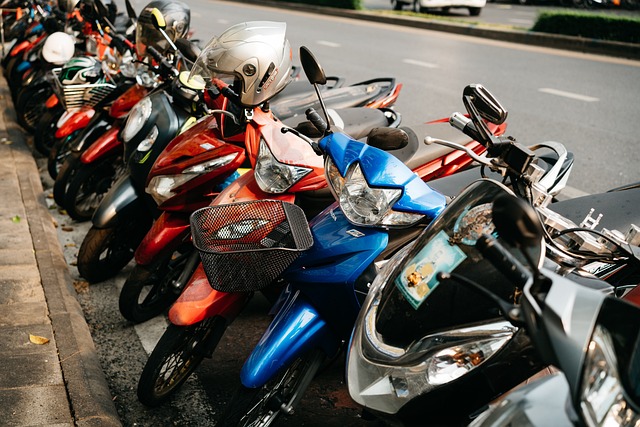
Besides traditional rentals, new options are emerging, especially electric scooter-sharing apps.
- The concept: Companies like CocoVolt offer electric scooters you can find and unlock via a mobile app, usually billed by the minute or hour.
- Advantages: It’s flexible for short, one-way trips, requires no paper contract or deposit, and is a greener, quieter option.
- Ideal for: Exploring a neighborhood, a quick trip to the beach, or running errands in town.
Typical Rental Costs
| Destination | Price/Day (THB) | Traffic Level |
|---|---|---|
| Bangkok | 200–400 | High |
| Chiang Mai | 150–300 | Moderate |
| Phuket | 250–500 | High |
| Koh Samui | 200–450 | Moderate |
| Pai | 100–200 | Low |
Insurance and Safety: What They Don’t Tell You
Insurance is Minimal at Best
Most basic rentals are not covered for theft or damage. Many travelers mistakenly rely on their credit card guarantees. To understand why this is an error, check our analysis of what your credit card travel protection actually covers. For proper protection, specific travel insurance for Thailand is essential.
🔐 Most rental scooters are not insured against theft. If your scooter is stolen, you will likely be liable for its full value, which can be 30,000–70,000 THB. Always use a lock and park in secure areas.
What Por Ror Bor Really Covers
Most rental scooters only come with the mandatory local insurance, known as Por Ror Bor (the mandatory third-party government insurance). It only covers minimal medical expenses for third parties. It does not cover damage to the scooter or your own injuries.
Questions to Ask Your Travel Insurer
Before you ride, call your travel insurance provider and ask:
- Does my policy explicitly cover riding a 125cc (or larger) scooter?
- Is the coverage valid only if I hold a full motorcycle license and an IDP?
- What are the deductibles and coverage limits for medical expenses and third-party liability?
✅ Check Your Travel Insurance Before Renting a Scooter
Before riding a scooter in Thailand, make sure your travel insurance covers medical expenses, hospitalization and scooter-related accidents. Always check license requirements, helmet rules and exclusions. A 5% discount on Heymondo travel insurance is available through our partner link.
Not sure Heymondo is the right fit? Compare Thailand travel insurance options.
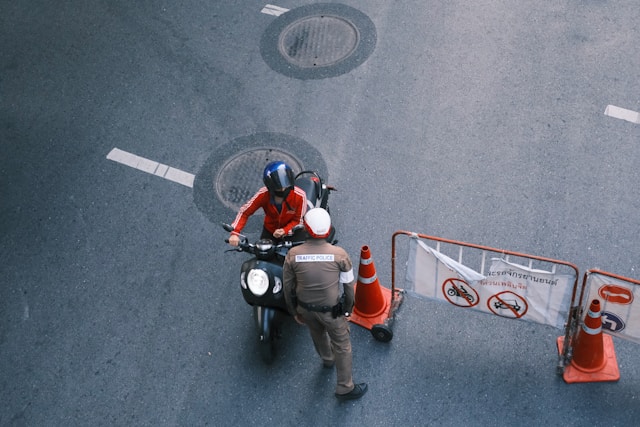
If You Have an Accident or Get Stopped by Police
For a broader overview of accident risks during major holiday periods, read our guide to road safety in Thailand.
- Emergency: dial 1669 for an ambulance, 1155 for tourist police.
- Don’t move the vehicle unless instructed.
- Always carry your license, rental contract, and proof of insurance.
Essential Safety Tips
Always Wear a Helmet
It’s mandatory and can save your life. Reject any damaged or ill-fitting helmets.
Current Helmet Fines and Regulations
Thailand has strict penalties for not wearing a helmet to improve road safety. Here are the key points:
- Fine per person: up to 2,000 THB (applies to both rider and passenger).
- Double Penalty: A rider carrying an unhelmeted passenger can face fines of up to 4,000 THB.
- Nationwide Enforcement: Police are strictly enforcing this law, especially in high-traffic areas.
Drive on the Left
Thailand drives on the left. Be cautious at intersections and during overtaking.
Is Renting a Scooter in Thailand Worth It?
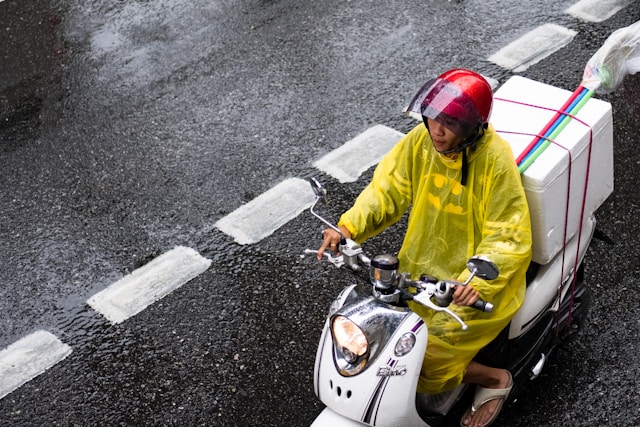
Renting a scooter in Thailand gives you unmatched freedom to explore. But it also comes with responsibilities: a valid license, awareness of the risks, and solid insurance coverage. If you’re prepared, it’s a rewarding way to travel. If not, opt for tuk-tuks, taxis, or local transport. Either way, Thailand awaits—on two wheels or not.
FAQ About Scooter Rental in Thailand
Do I need a motorcycle license to rent a scooter in Thailand?
Yes. To be fully insured, you need a full motorcycle license (Category A) and an International Driving Permit. A1-type licenses are not sufficient.
Should I leave my passport as a deposit?
No. Never. Reputable agencies accept a copy and a cash deposit.
Does my travel insurance cover scooter accidents?
Only if you hold the proper license and adhere to all local laws. Check your policy’s fine print for exclusions.
📘 Thai Transport Glossary
- Songthaew: Shared taxi converted from a pickup truck.
- Grab: Ride-hailing app like Uber, widely used in Thailand.
- Por Ror Bor: Mandatory basic third-party insurance for vehicles in Thailand.
- Tuk-tuk: Three-wheeled motorized taxi, iconic in Thai cities.
🔄 Last updated on June 13, 2026