Road safety in Thailand raises serious concerns during the country’s so-called “7 dangerous days” of New Year and Songkran. Contrary to what some travelers assume, the main danger in Thailand is not crime but the road.
This article looks at the latest official figures (2024–2026), published by the Department of Disaster Prevention and Mitigation (DDPM) and reported by Thai media, to help you understand the risks and travel more safely.
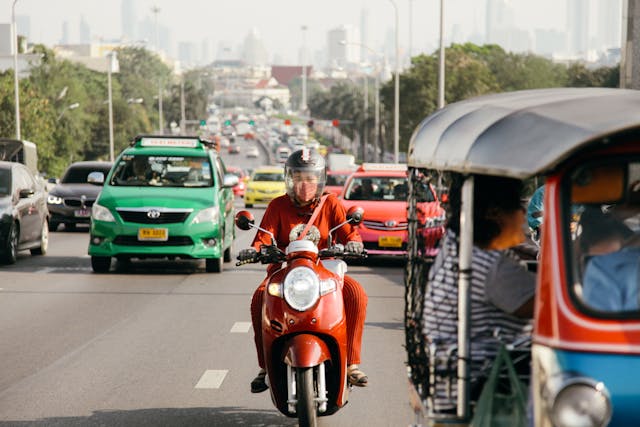
What are the “7 dangerous days” in Thailand?
An official term, not just a media expression
The phrase “7 dangerous days” is not just a dramatic media label. It is commonly used in Thailand by the authorities and by the Department of Disaster Prevention and Mitigation (DDPM) to refer to two periods each year when road traffic surges and accident risks rise sharply:
- New Year: usually from December 30 to January 5, which corresponds to the official seven-day road safety monitoring period.
- Songkran: around mid-April, with the exact official monitoring period announced each year by the authorities.
Why is this period so critical?
During these holidays, millions of people leave Bangkok and other major cities to return to their home provinces. This massive movement creates intense traffic across the country. Long-distance driving, fatigue, nighttime travel, and alcohol consumption during celebrations all increase the risk of serious accidents.
Official road accident statistics: the reality behind the numbers (2024–2026)
To understand the scale of the problem, it helps to look at the official figures. While the totals vary from year to year, the overall road toll remains very high for all road users.
| Period | Accidents | Deaths | Injuries |
|---|---|---|---|
| Songkran 2026 (April 10–16, 2026, final toll) | 1,242 | 242 | 1,200 |
| New Year 2026 (Dec. 30, 2025 – Jan. 5, 2026, final toll) | 1,511 | 272 | 1,464 |
| Songkran 2025 | 1,538 | 253 | 1,495 |
| New Year 2025 | 1,938 | 321 | 1,894 |
| Songkran 2024 | 2,044 | 287 | 2,060 |
| Source: official reports from Thailand’s Department of Disaster Prevention and Mitigation (DDPM) | |||
Recent trends
The figures for Songkran 2026 show a further improvement compared with 2025 and 2024, with 242 deaths versus 253 in 2025 and 287 in 2024. The number of accidents also fell significantly, from 1,538 in 2025 to 1,242 in 2026. Even so, the toll remains extremely high, with 242 deaths in just seven days. Songkran 2026 data also showed that Bangkok recorded the highest number of deaths overall, while Phrae had the highest number of accidents and injuries during the campaign.
Why are these days so dangerous?
Road accidents in Thailand during these holiday periods follow clear patterns that travelers should understand.
1. Human factors and alcohol
Speeding remains the leading cause of accidents, followed depending on the day by drunk driving and dangerous lane changes. Although police controls are reinforced during holiday periods, alcohol consumption still plays a major role, and many drivers take risks on short trips close to home or during evenings out.
2. Motorbikes are on the front line
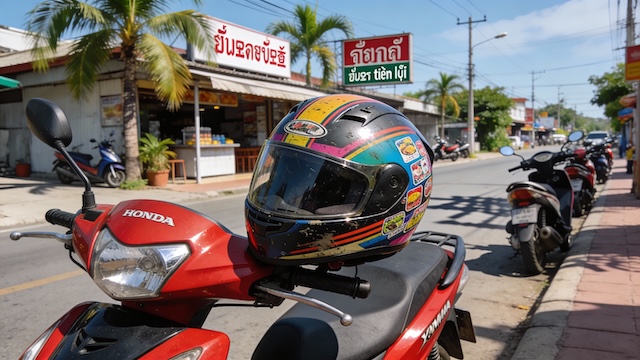
This is the most important statistic for travelers: motorbikes account for more than 70% of the vehicles involved in accidents during Songkran, according to the 2026 daily reports. The mix of high speeds, little physical protection, fatigue, and alcohol often leads to serious consequences. Renting a scooter in Thailand during these seven days increases your exposure to risk considerably. To stay safe, learn what to do if you have a scooter accident in Thailand.
3. Exceptional traffic conditions
It is not only risky behavior that causes accidents. Traffic density also rises dramatically. Secondary roads that are usually quiet become overloaded with family pick-up trucks, long-distance buses, cars, and local motorbikes, creating more opportunities for crashes.
🚨 Stricter road law enforcement in Thailand (2026)
Since April 1, 2026, the Royal Thai Police have moved into a phase of strict enforcement of road traffic rules after an earlier period of warnings and lighter enforcement. The aim is to reduce accidents by penalizing the most dangerous behavior more seriously.
- No helmet, no seatbelt, or riding the wrong way: fines of up to 2,000 THB.
- Speeding, running a red light, or failing to stop at a pedestrian crossing: fines of up to 4,000 THB.
- Drink driving: fines of 5,000 to 20,000 THB and/or up to 1 year in prison.
License warning: driving without a valid license can lead to a fine of up to 1,000 THB and up to 1 month in prison. Foreign visitors should carry both their national driving license and an international driving permit where required.
Practical safety tips for travelers during holiday periods
If you are in Thailand during New Year or Songkran, a few simple precautions can significantly reduce your risk.
✅ Before you travel
- Avoid renting a scooter: unless you are an experienced rider with a valid international driving permit, it is usually safer to avoid scooters during these periods. The UK government travel advice for Thailand also highlights the importance of checking your travel insurance. Taxis, ride-hailing apps, and private drivers are safer options.
- Plan long journeys carefully: try to avoid the first and last days of the holiday period, when traffic, fatigue, and return travel peaks are usually at their worst.
If you are involved in a road accident during the “7 dangerous days”, medical costs can rise very quickly, especially in private hospitals.
✅ Check Your Travel Insurance Before Driving in Thailand
Before driving a scooter, motorbike or rental car in Thailand, make sure your travel insurance covers medical expenses, hospitalization, road accidents and emergency assistance. This is especially important during busy holiday periods such as New Year and Songkran. Always check license requirements, helmet rules, exclusions and coverage limits before getting on the road.
A 5% discount on Heymondo travel insurance is available through our partner link.
Not sure Heymondo is the right fit? Compare Thailand travel insurance options.
✅ On the road
- Drive defensively at all times: assume that other road users may make sudden mistakes. Keep a safe distance, especially around pick-up trucks carrying passengers in the back.
- Avoid driving at night: after 8 p.m., visibility falls and the overall risk level rises.
- Always wear a helmet: it is your main protection on a motorbike. Make sure the helmet is in good condition and ideally full-face.
✅ If an accident happens
If you are involved in a serious accident, call 1669 for emergency medical services or 1155 for the tourist police (English-speaking, available 24/7). Make sure your travel insurance covers road accidents and medical evacuation before you travel — costs in private hospitals can be very high.
Myth vs reality: should travelers be worried?
“Is it more dangerous than the rest of the year?” Yes and no
Thailand has one of the highest road fatality rates in the world throughout the year. During the “7 dangerous days”, the daily accident totals are not always dramatically higher than the annual average, but the media coverage is much more intense. Heavy holiday traffic increases the risk of collisions, while stronger police enforcement sometimes limits certain behaviors on major roads. The risk is real, but for cautious travelers it is also largely avoidable.
Road Safety in Thailand: Key Takeaways
The “7 dangerous days” should not stop you from visiting Thailand. They are mainly a reminder that road safety matters. By choosing trains, flights, long-distance buses, and ride-hailing services such as Grab or Bolt instead of scooters, you remove a large part of the risk. Thailand remains a fantastic destination for New Year and Songkran, as long as you travel responsibly.