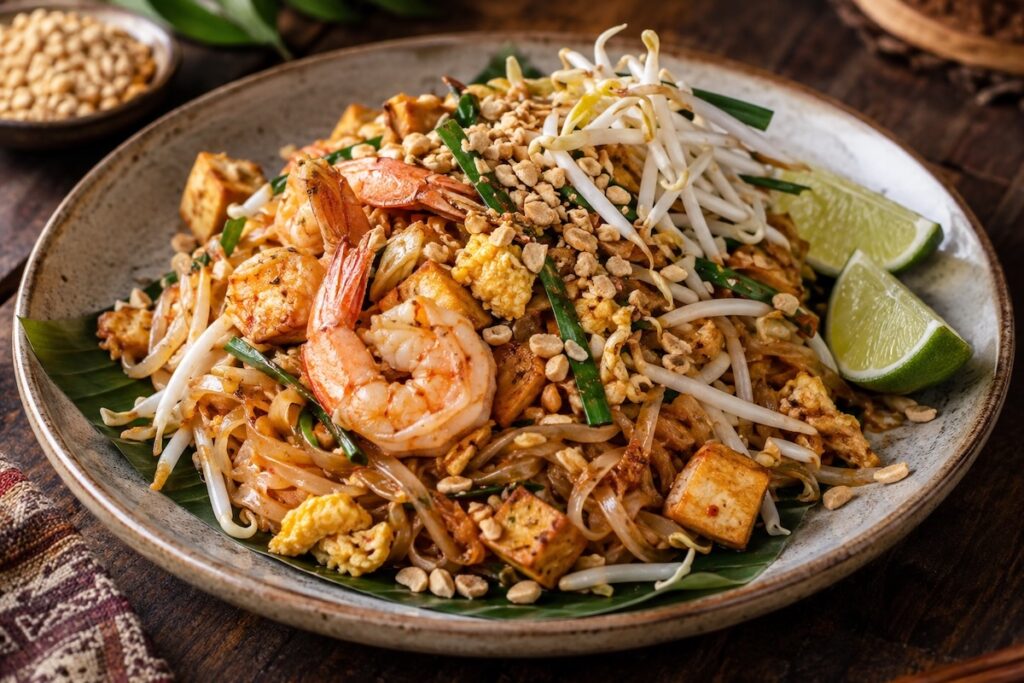
Pad Thai (ผัดไทย) is one of Thailand’s best-known dishes. These wok-fried rice noodles balance sour, salty and slightly sweet flavors with tamarind, fish sauce and palm sugar.
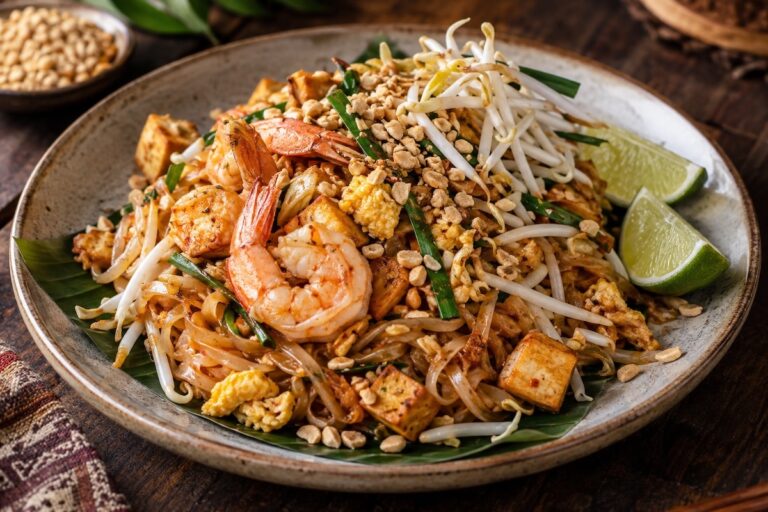
This traditional shrimp Pad Thai recipe also includes tofu, eggs, bean sprouts, garlic chives and peanuts, with the key techniques needed to keep the noodles tender without becoming mushy.
At the table with Portail Asie
Traditional Shrimp Pad Thai
Make traditional shrimp Pad Thai with rice noodles, tamarind, eggs, tofu, bean sprouts and peanuts.
- Prep time
- 20 min
- Cooking time
- 10 min
- Total time
- 30 min
- Servings
- 2
- Difficulty
- Easy
- Spice level
- 0/5
- Cuisine
- Thailand
- Dish type
- Main dish
Last checked: September 21, 2026
About this recipe
Version: Close to traditional
Pad Thai depends on the balance between tamarind, fish sauce and palm sugar. The shrimp version typically combines rice noodles, eggs, tofu, bean sprouts, garlic chives, peanuts and lime.
Do not substitute: Avoid replacing tamarind with ketchup if you want the classic Pad Thai flavor profile. Ketchup adds a sweeter tomato flavor that significantly changes the balance of the dish.
Ingredients
Adjust servings to suit your needs.
For the Pad Thai sauce
- 3 tbsp Tamarind paste or pureeadjust depending on concentration
- 2 tbsp Fish sauce
- 30 to 35 g Palm sugarchopped or grated
- 2 to 3 tbsp Water
For the Pad Thai
- 150 g Dried flat rice noodlesmedium width
- 200 g Raw peeled shrimp
- 100 g Firm tofucut into small cubes or strips
- 2 Eggs
- 1 small Shallotchopped
- 2 cloves Garlicchopped
- 100 g Bean sprouts
- 40 g Garlic chivescut into 4–5 cm pieces
- 40 g Unsalted roasted peanutscoarsely crushed
- 1 tbsp Small dried shrimpoptional
- 1 tbsp Thai preserved salted radish (chai po)optional
- 2 to 3 tbsp Vegetable oil
- 1 Limecut into wedges
- Chili flakesto taste
Preparation steps
Place the rice noodles in a large bowl of room-temperature water. Soak for about 30–60 minutes, depending on their thickness, until flexible but still slightly firm. Drain thoroughly.
Prepare the sauce: combine the tamarind, fish sauce, palm sugar and water in a small saucepan. Heat gently until the sugar has completely dissolved. Taste and adjust if needed to balance sourness, saltiness and sweetness.
Prepare all the ingredients before cooking: cut the tofu, chop the garlic and shallot, cut the garlic chives, crush the peanuts and keep the bean sprouts within reach.
Heat a wok or large skillet over high heat with a little oil. Quickly cook the shrimp until pink, then remove them from the wok and set aside.
Add a little more oil if needed, then briefly sauté the shallot and garlic. Add the tofu and, if using them, the dried shrimp and preserved Thai radish. Stir-fry for about one minute.
Add the drained noodles to the wok and gradually pour in the Pad Thai sauce. Toss well to coat. If the noodles are still too firm, add one or two tablespoons of water and continue cooking briefly.
Push the noodles to one side of the wok. Add a few drops of oil if needed, crack the eggs into the empty space and let them set for a few seconds before roughly scrambling them. Mix them into the noodles.
Return the shrimp to the wok. Add the bean sprouts and garlic chives, then stir-fry for another 30 seconds to 1 minute so the sprouts remain slightly crisp.
Serve immediately with the crushed peanuts, a lime wedge, a few fresh bean sprouts and chili flakes to taste.
Common mistakes and how to avoid them
The noodles become soft and sticky
Probable cause: They were soaked for too long or precooked before being added to the wok.
Solution: Soak the noodles only until flexible but still firm, then finish cooking them in the wok with the sauce.
The Pad Thai is too sweet
Probable cause: Too much palm sugar was used compared with the tamarind and fish sauce.
Solution: Add the sugar gradually and taste the sauce before cooking. The acidity of the tamarind and the saltiness of the fish sauce should remain noticeable.
The noodles remain too firm
Probable cause: The soaking time was too short or there is not enough moisture in the wok.
Solution: Add one or two tablespoons of water and cook briefly until the noodles are tender but not mushy.
The Pad Thai is wet and does not sear properly
Probable cause: The wok is overcrowded or not hot enough.
Solution: Cook over high heat and prepare small batches, ideally one or two portions at a time, so the ingredients stir-fry instead of steaming.
The bean sprouts lose their crunch
Probable cause: They were added too early.
Solution: Add the bean sprouts and garlic chives only near the end and stir-fry for 30 seconds to 1 minute.
Portail Asie tips
Do not boil the noodles before adding them to the wok: soaking is usually enough and helps prevent them from becoming mushy. Prepare every ingredient before turning on the heat because the cooking process is fast. The sauce should stay balanced between tamarind, fish sauce and palm sugar; Pad Thai should be neither excessively sweet nor drowned in sauce. To keep the wok hot, cook small quantities at a time.
Substitutions and alternatives
- Shrimp
- Pad Thai can also be made with chicken, pork, or simply tofu and eggs.
- Garlic chives
- Use regular chives or the green parts of spring onions if garlic chives are unavailable.
- Palm sugar
- Use brown cane sugar if palm sugar is unavailable. The flavor will be slightly different but the balance of the sauce will remain similar.
- Thai preserved salted radish (chai po)
- This ingredient is optional and can simply be omitted if it is difficult to find.
Watch the preparation
The video is loaded from YouTube after you click.
Order this dish in Thailand
Thai name:ผัดไทย
Say it simply:Phat Thai
Show this:ขอผัดไทยกุ้งหนึ่งที่ครับ/ค่ะ
Meaning:One shrimp Pad Thai, please.
Where to find the ingredients
Flat rice noodles, tamarind, fish sauce, palm sugar, tofu, bean sprouts and peanuts are widely available in Asian grocery stores. Garlic chives, small dried shrimp and Thai preserved salted radish can be harder to find in Europe but are common in markets and supermarkets in Thailand.