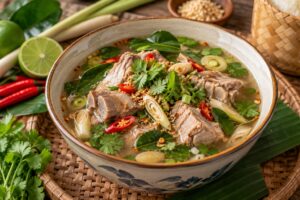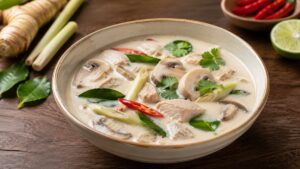
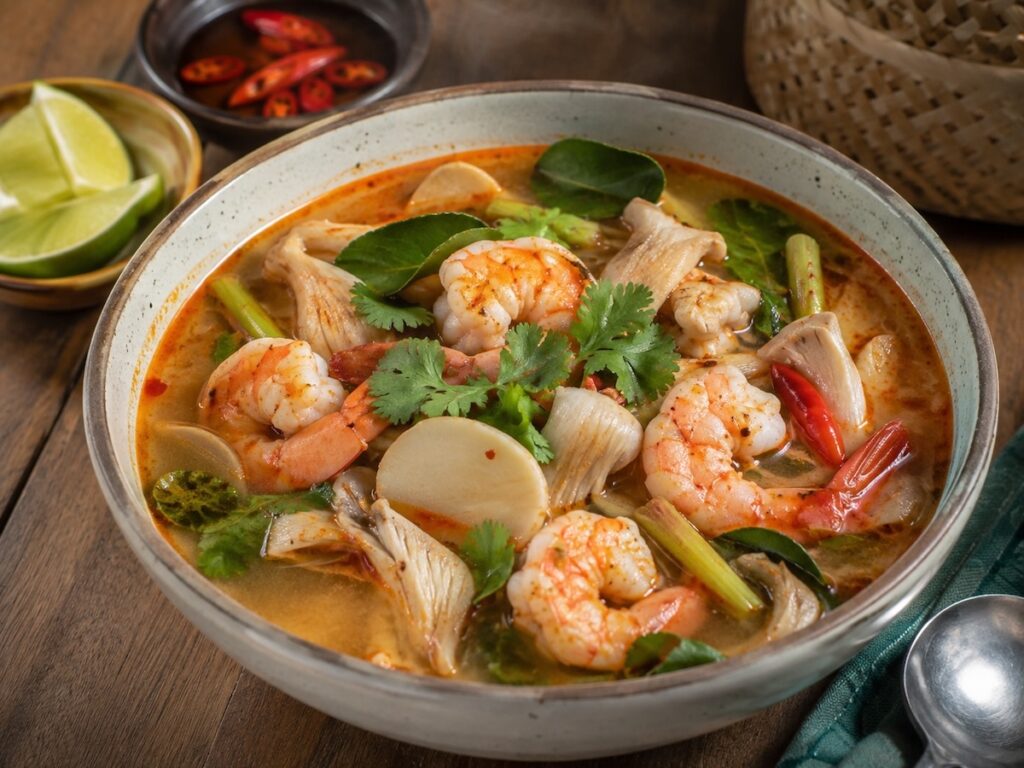
Tom Yum Goong (ต้มยำกุ้ง), also written Tom Yum Kung, is one of Thailand’s most iconic soups. Its bright, aromatic flavor is built around lemongrass, galangal and makrut lime leaves, together with chili, fish sauce and fresh lime juice.
This recipe is for the clear version of Tom Yum Goong, made with shrimp and oyster mushrooms. The broth should be strongly aromatic, sour and spicy while remaining balanced enough to serve with jasmine rice.
At the table with Portail Asie
Traditional Tom Yum Goong
Make Tom Yum Goong, Thailand’s famous hot and sour shrimp soup with lemongrass, galangal, makrut lime leaves, chili and lime juice.
- Prep time
- 20 min
- Cooking time
- 20 min
- Total time
- 40 min
- Servings
- 4
- Difficulty
- Easy
- Spice level
- 3/5
- Cuisine
- Thailand
- Dish type
- Soup
Last checked: September 4, 2026
About this recipe
Version: Close to traditional
This recipe is for clear-broth Tom Yum Goong. Its identity comes from lemongrass, galangal, makrut lime leaves, chili, fish sauce and lime juice, together with shrimp and nam prik pao.
Do not substitute: Galangal, lemongrass and makrut lime leaves form the aromatic core of Tom Yum. Replacing galangal with ginger or removing several of these aromatics noticeably changes the soup’s character.
Ingredients
Adjust servings to suit your needs.
For the Tom Yum Goong
- 960 ml Shrimp stockor unsalted chicken stock
- 12 to 15 Medium or large shrimpideally whole with heads and shells if making shrimp stock
- 2 stalks Lemongrasslower part only, bruised and cut into sections
- 6 Makrut lime leavesbruised, torn and center stems removed
- 8 slices Fresh galangalthinly sliced
- 2 to 5 Thai chiliesroughly crushed or finely chopped, depending on desired heat
- 200 g Oyster mushroomstorn into pieces
- 60 ml Nam prik paoThai roasted chili paste
- 3 tbsp Fish sauceadjust to taste
- 120 ml Lime juicefreshly squeezed, added off heat
- 1 tsp Sugaroptional, only if the soup is too sour
- Fresh cilantrochopped, for serving
- Cooked jasmine ricefor serving
Preparation steps
If using whole shrimp, peel them and reserve the heads and shells to make shrimp stock. Otherwise, use a good unsalted chicken stock.
Pour the stock into a saucepan. Add the lemongrass, galangal, chilies, oyster mushrooms and bruised, torn makrut lime leaves. Bring to a gentle simmer and let the aromatics infuse for about 5 minutes.
Take a small ladle of hot broth and mix it with the nam prik pao to loosen it, then pour the mixture back into the saucepan. Add the fish sauce and stir.
Briefly bring the soup to a boil, add the shrimp and cook for only 30–50 seconds, until they are about halfway cooked. Turn off the heat; the residual heat will finish cooking them.
Add the lime juice off the heat. Taste and adjust with a little more fish sauce if needed. If the acidity is truly too strong, add a small amount of sugar.
Add the cilantro and serve immediately. Let diners know that the large pieces of lemongrass, galangal and makrut lime leaves flavor the soup but are generally not meant to be eaten. Serve with jasmine rice.
Common mistakes and how to avoid them
The shrimp become rubbery
Probable cause: They were cooked too long in the broth.
Solution: Cook them only until halfway done, then turn off the heat and let the residual heat finish the cooking.
The soup is too sour
Probable cause: Too much lime juice was added or the broth lacks balance.
Solution: Add the lime juice gradually. If necessary, correct with a very small amount of sugar rather than immediately diluting the soup.
The broth lacks depth
Probable cause: The base stock is too weak or the aromatics did not infuse long enough.
Solution: If possible, use stock made from shrimp heads and shells and let the aromatics infuse for a few minutes before adding the shrimp.
Portail Asie tips
Lemongrass, galangal and makrut lime leaves form the aromatic foundation of Tom Yum. Do not boil the shrimp for too long: they cook very quickly and become rubbery. Always add the lime juice after turning off the heat to preserve its freshness. Tom Yum is intentionally powerful when tasted on its own because it is traditionally served with rice.
Substitutions and alternatives
- Shrimp stock
- Unsalted chicken stock works very well if whole shrimp are unavailable. The broth will be less intensely seafood-flavored but will remain balanced.
- Fresh galangal
- Frozen galangal is the best alternative. Ginger does not have the same aroma and noticeably changes the character of Tom Yum.
- Makrut lime leaves
- Use frozen leaves if fresh ones are unavailable. Dried leaves can work in a pinch but have a less intense aroma.
- Oyster mushrooms
- Button mushrooms or fresh shiitake can also work, although oyster mushrooms have a particularly suitable texture for the soup.
- Nam prik pao
- Nam prik pao is strongly recommended for the classic Tom Yum Goong profile served in many Thai restaurants. If unavailable, omit it and add a few tomato wedges plus a little sugar for sweetness and umami.
Watch the preparation
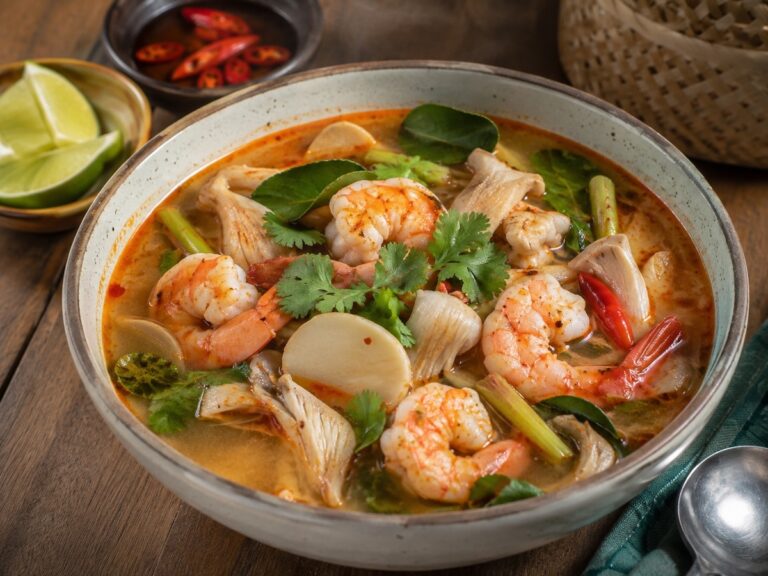
The video is loaded from YouTube after you click.
Order this dish in Thailand
Thai name:ต้มยำกุ้ง
Say it simply:Tom Yam Goung
Show this:ต้มยำกุ้ง 1 ที่
Meaning:One Tom Yum Goong.
Where to find the ingredients
Lemongrass, galangal, makrut lime leaves, nam prik pao and fish sauce are available in Asian grocery stores and Thai supermarkets. Frozen galangal and makrut lime leaves are excellent alternatives when fresh ones are unavailable. For nam prik pao, look for a sweet and savory Thai roasted chili paste rather than an instant Tom Yum soup paste.