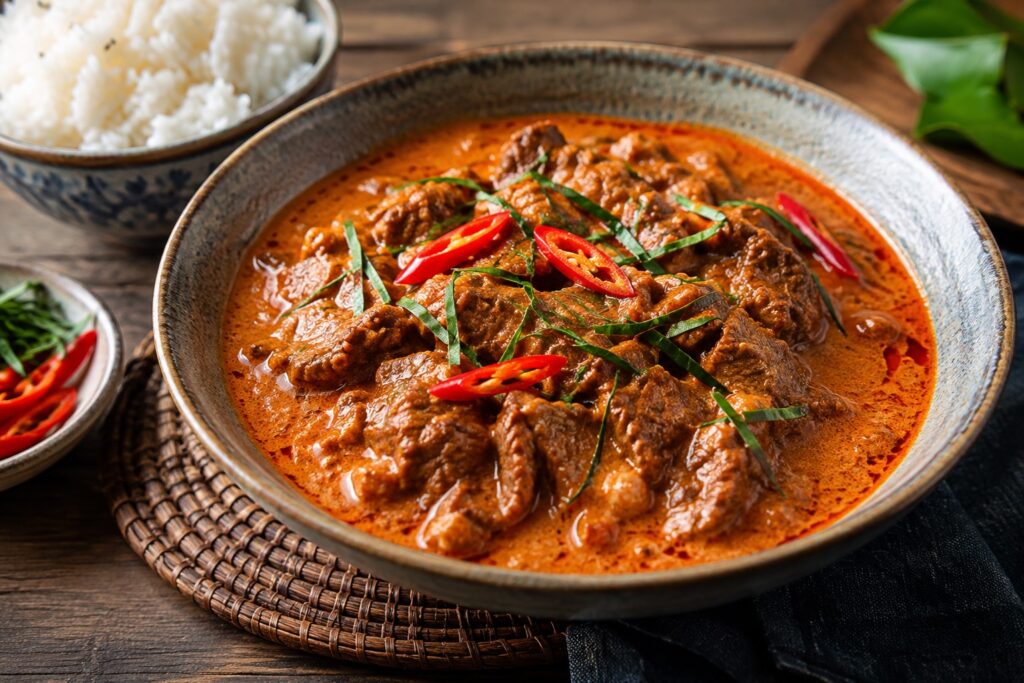
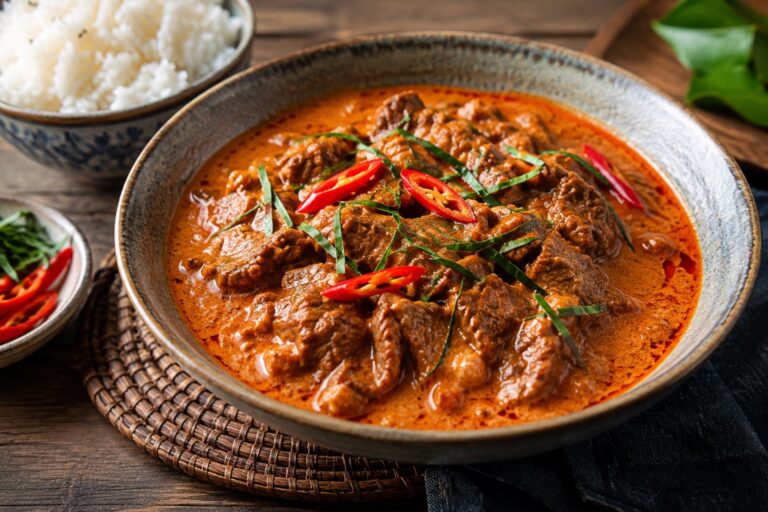
Panang curry (พะแนง) is a rich and aromatic Thai curry with a thicker consistency than red or green curry. Its sauce combines coconut milk, Panang curry paste, fish sauce, palm sugar and makrut lime leaves.
This beef version uses a thick, creamy sauce with very little liquid and no added vegetables. The final balance should bring together sweetness, saltiness, heat and fresh citrus notes.
At the table with Portail Asie
Beef Panang Curry
Make beef Panang curry, a rich and creamy Thai curry with coconut milk, Panang curry paste, makrut lime leaves, palm sugar and peanuts.
- Prep time
- 15 min
- Cooking time
- 15 min
- Total time
- 30 min
- Servings
- 4
- Difficulty
- Easy
- Spice level
- 2/5
- Cuisine
- Thailand
- Dish type
- Main dish
Last checked: September 21, 2026
About this recipe
Version: Close to traditional
Panang curry differs from more liquid Thai curries by its thick, rich and reduced sauce. Makrut lime leaves are essential to its aroma, while Panang curry paste is distinguished in particular by toasted spices and, depending on the recipe, the addition of peanuts.
Do not substitute: If you want the classic Thai profile, avoid turning Panang into a very liquid curry or automatically adding a large quantity of vegetables. The dish should primarily showcase the beef, curry paste, coconut milk and makrut lime leaves.
Ingredients
Adjust servings to suit your needs.
For the Panang curry
- 500 g Tender beefrump steak, strip steak or flank steak, thinly sliced against the grain
- 400 ml Coconut milkfull-fat, good quality
- 3 tbsp Panang curry pasteadjust according to its strength
- 1 tbsp Palm sugarchopped or grated
- 1 to 1½ tbsp Fish sauceadjust according to the saltiness of the curry paste
- 5 Makrut lime leaves2 torn and 3 very finely shredded
- 1 tbsp Unsalted roasted peanutsfinely ground; optional if the curry paste already contains peanuts
- 1 Mild red chilifinely sliced; optional for garnish
To serve
- Thai jasmine riceas needed
Preparation steps
Slice the beef thinly against the grain. Tear two makrut lime leaves to flavor the sauce and very finely shred the remaining three for the garnish.
Pour about half of the coconut milk into a wok or large skillet. Heat over medium heat, stirring regularly, until it thickens noticeably. Depending on the brand, some coconut oil may begin to separate.
Add the Panang curry paste and fry it in the thickened coconut milk for 2–3 minutes, stirring constantly, until very fragrant.
Add the palm sugar and the two torn makrut lime leaves. Stir until the sugar has dissolved.
Add the beef and stir well to coat the slices with the curry paste. Cook briefly for about 1–2 minutes, stirring.
Pour in the remaining coconut milk. Bring to a gentle simmer and cook for about 3–5 minutes, just long enough to cook the beef while keeping the sauce thick and creamy.
Add 1 tablespoon of fish sauce first. Taste before adding more, as some curry pastes are already quite salty. Stir in the ground peanuts if your curry paste does not contain them or if you want a slightly richer sauce.
Remove the torn makrut lime leaves if you wish. Serve immediately with jasmine rice and garnish with the finely shredded makrut lime leaves and sliced mild red chili.
Common mistakes and how to avoid them
The sauce is too thin
Probable cause: The coconut milk did not reduce enough or too much liquid was added.
Solution: Simmer uncovered for a few more minutes. Panang should have a thick, reduced sauce rather than the consistency of a soup.
The curry paste tastes raw
Probable cause: It was not cooked long enough in the thickened coconut milk.
Solution: Fry the paste for 2–3 minutes until very fragrant before adding the beef and the remaining coconut milk.
The curry is too salty
Probable cause: The curry paste was already salty and the fish sauce was added too quickly.
Solution: Add the fish sauce gradually and taste before each addition. A small amount of extra coconut milk can also soften a slightly oversalted curry.
The beef becomes tough
Probable cause: The slices were cut too thick, sliced with the grain or cooked for too long.
Solution: Slice the beef thinly against the grain and limit the cooking time after adding the remaining coconut milk.
The makrut lime aroma is too weak
Probable cause: The leaves are old, dried or were cooked for too long.
Solution: Use fresh or frozen leaves when possible and add some very finely shredded leaves just before serving.
Portail Asie tips
Panang curry should remain thicker and less liquid than red or green curry. Reduce part of the coconut milk well before adding the curry paste and avoid adding unnecessary water. Slice the beef thinly against the grain and do not simmer it for too long so it stays tender. Always taste before adding all the fish sauce because commercial curry pastes can already be quite salty. Very finely shredded makrut lime leaves added just before serving provide the fresh citrus aroma characteristic of the dish.
Substitutions and alternatives
- Tender beef
- You can use chicken or pork instead. If using lean meat, slightly reduce the cooking time to help keep it tender.
- Panang curry paste
- If unavailable, use a good Thai red curry paste and add a little cumin, toasted coriander and ground peanuts to bring the flavor closer to Panang curry.
- Palm sugar
- Use light brown cane sugar if palm sugar is unavailable. Add it gradually because the sweetness may differ.
- Makrut lime leaves
- Frozen leaves are preferable to dried leaves when available. Their distinctive aroma is difficult to replace without noticeably changing the flavor of the curry.
Watch the preparation
The video is loaded from YouTube after you click.
Order this dish in Thailand
Thai name:พะแนงเนื้อ
Say it simply:Phanaeng nuea
Show this:ขอพะแนงเนื้อหนึ่งที่ครับ/ค่ะ
Meaning:One beef Panang curry, please.
Where to find the ingredients
Panang curry paste, makrut lime leaves, palm sugar, fish sauce and coconut milk are available at most Asian grocery stores. In Thailand, these ingredients are common in markets and supermarkets. Check the ingredients in your Panang curry paste, however, as some brands already contain peanuts, other legumes or shrimp paste.