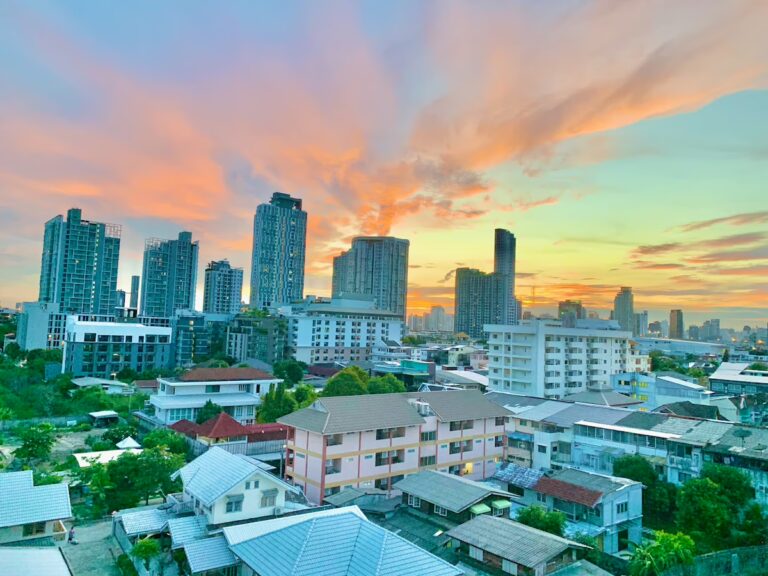
Bangkok remains accessible despite the flooding that has affected several parts of the capital. Conditions are improving significantly, the main tourist areas and rail services are operating, but some neighbourhoods remain flooded and disruption continues in certain areas.
Here is the current situation in Bangkok, the areas to watch and the main precautions to take over the coming days.
Update: 1 October 2026
- Bangkok’s main tourist areas remain accessible.
- The BTS, MRT, Airport Rail Link and Red Line are operating.
- Suvarnabhumi and Don Mueang airports remain open, although Thai Airways is still experiencing disruption.
- The disaster designation has been lifted in 21 districts; 29 remain affected.
- Some neighbourhoods and roads remain locally flooded despite the overall improvement.
- Further showers are possible, with the risk of heavier rain increasing again on 5 and 6 October.
What is the current flood situation in Bangkok?
Conditions are gradually improving following the very heavy rainfall at the end of September. Authorities are nevertheless continuing pumping and drainage operations in areas where water is taking longer to recede.
Bangkok was declared a disaster-affected area across all 50 districts on 25 September. On 29 September, however, the Bangkok Governor lifted the designation in 21 districts. It therefore remains in force in 29 districts, 14 of which were assessed as moderately affected and 15 as severely affected according to the latest official assessment.
According to figures released at the end of September, around 329,000 households in Bangkok had been affected to varying degrees since the flooding began.
The main episode of heavy rain has eased, but the weather risk has not completely disappeared. The Thai Meteorological Department forecasts isolated showers through 4 October, followed by more widespread thunderstorms, with locally heavy rain and gusty winds possible in Bangkok on 5 and 6 October.
Conditions can still vary significantly from one street to another. A major road may already be passable while a nearby side street (soi) or low-lying area remains flooded.
These conditions are linked to Thailand’s rainy season, but the September 2026 episode was particularly intense: nearly 300 mm of rain fell in less than 48 hours in some parts of Bangkok, according to figures reported when the city was declared a disaster zone.
High tide to watch until 4 October
Authorities are also monitoring a period of high tide until 4 October. Higher water levels in the Chao Phraya and other rivers can slow drainage in some areas, particularly communities outside flood barriers, places without permanent flood protection and parts of Sukhumvit Road, Suksawat Road and Rama II Road.
This does not mean that every neighbourhood near the Chao Phraya is flooded. Conditions should still be checked locally, particularly after further rainfall.
Can you still visit Bangkok right now?
Yes, much of Bangkok remains open to visitors. In its latest travel update, the Tourism Authority of Thailand says that Bangkok continues to welcome visitors and that most tourist attractions and visitor services remain open.
Siam, Ratchaprasong, Chinatown around Yaowarat, Talat Noi and Song Wat remain accessible. In the historic centre, the Grand Palace, the Temple of the Emerald Buddha, Wat Pho and Wat Arun also remain open according to the TAT travel information.
If your plans mainly involve central Bangkok and places served by the BTS or MRT, many visits remain possible. Our Bangkok travel guide can help you adapt your itinerary by prioritising attractions close to the rail network.
Key point
Images of deeply flooded streets are genuine, but they do not necessarily reflect conditions across the whole of Bangkok. Flooding remains highly localised.
Which parts of Bangkok are still affected?
The most persistent problems are concentrated mainly in some low-lying parts of eastern and north-eastern Bangkok, where canal levels remain high and drainage can take longer.
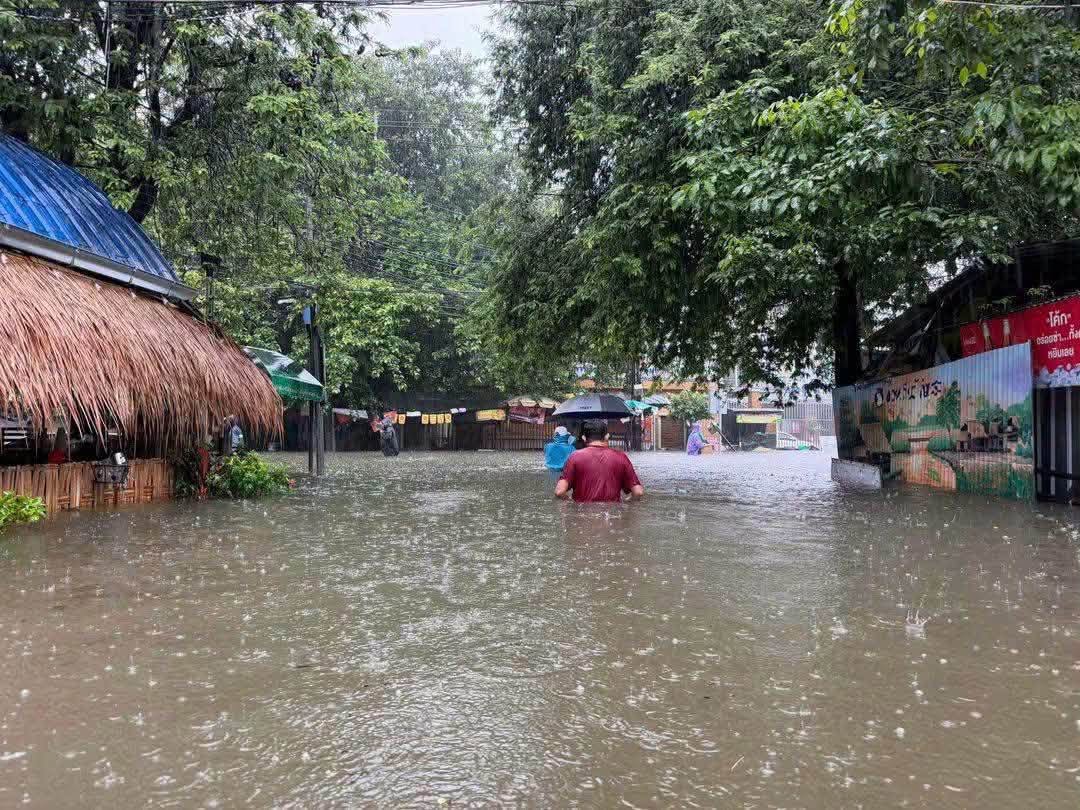
In its update on 29 September, the government indicated that Ram Inthra, Khlong Chan and Rom Klao were still among the communities experiencing significant flooding.
A specific flood warning has also been issued for parts of Sai Mai, Khlong Sam Wa and Nong Chok near Khlong Hok Wa Sai Lang because of high water levels.
In Rom Klao, within Lat Krabang district, some residential areas were particularly badly affected during the peak of the flooding. Water is receding more slowly there than on many major roads.
It is important not to interpret the continued disaster designation of a district as meaning that every street within it is flooded. Conditions can vary considerably from one area to another.
For a broader view of areas exposed to flooding, the GISTDA map provides useful additional information.
How can you check whether a road is still flooded?
Road conditions change too quickly for a fixed list of flooded streets to remain reliable. On 29 September, the Bangkok Metropolitan Administration said that around 90% of the main roads were expected to dry relatively quickly if there was no further heavy rain, while low-lying areas such as Khlong Chan and Rom Klao could take longer.
Before taking a taxi or driving, check Bangkok’s official flood monitoring map. The Bangkok Metropolitan Administration system shows road water-level monitoring points and CCTV feeds. The interface is mainly in Thai, but most browsers can translate it automatically.
Are the BTS and MRT operating during the floods?
Yes. The BTS Skytrain and MRT continue to operate and are generally among the most reliable ways to travel when roads are congested or temporarily flooded.
However, remember to check the final part of your journey between the station and your destination. A station may be operating normally while nearby streets remain difficult to access.
Route-planning apps are useful for comparing alternatives and checking traffic conditions. Whenever possible, use the BTS or MRT for the main part of your journey.
What about the Airport Rail Link and Red Line?
The Airport Rail Link, which connects Suvarnabhumi Airport with central Bangkok, is operating and provides a way to reach Phaya Thai without relying entirely on road traffic.
The Red Line also serves Don Mueang Airport from Krung Thep Aphiwat and can be particularly useful when roads in northern Bangkok are congested.
Are Bangkok’s airports open?
Suvarnabhumi (BKK) and Don Mueang (DMK) remain open and operational. It is important, however, to distinguish between the airports themselves remaining open and disruption affecting individual airlines or road access.
If you have a flight, check directly with your airline before leaving your accommodation and allow more time than usual. You can also check our latest information on flight disruptions and cancellations affecting Thailand.
Suvarnabhumi: Thai Airways remains disrupted
The Airport Rail Link is currently a useful option if your accommodation has convenient access to Phaya Thai or Makkasan.
Suvarnabhumi remains open and operational, but Thai Airways is still experiencing flight cancellations and schedule changes. The airline has announced further disruption on selected domestic and international services between 1 and 3 October. Check your booking directly before travelling to the airport.
The disruption has also caused significant delays in baggage handling. As of 1 October, around 8,000 delayed bags were still being processed at Suvarnabhumi.
Thai Airways passengers who arrived at Suvarnabhumi between 26 and 29 September can check their baggage through the Airports of Thailand baggage tracking service.
Don Mueang: taxis and the Red Line are available
At Don Mueang Airport, the Red Line from Krung Thep Aphiwat can help travellers avoid some of the road congestion.
Taxi services at Don Mueang resumed on 1 October. Drivers can serve destinations that remain accessible by road, while staff at the taxi counters can suggest alternative transport where flooding prevents access.
The A1 to A4 airport buses are also an option, although journey times depend on traffic conditions.
Free shuttle from Suvarnabhumi to Don Mueang
A temporary free shuttle is currently operating from Suvarnabhumi to Don Mueang to assist travellers affected by the disruption. It departs from Suvarnabhumi Passenger Terminal, Level 2, Door 3, between 5 a.m. and midnight, approximately every 30 minutes. The service is expected to continue until conditions return to normal.
Have a flight?
Check your flight immediately before leaving, allow plenty of extra time and use rail services whenever your route allows. Thai Airways passengers should pay particular attention to cancellations, schedule changes and baggage delays.
Should you cancel or postpone a trip to Bangkok?
There is currently no general need to cancel a trip to Bangkok. The city continues to welcome visitors, and most tourist attractions and major public transport services remain operational.
However, it may be sensible to adapt your plans if your itinerary relies heavily on road transport or involves an area that is still affected.
Before making a decision, check:
- actual access to your hotel, not just the name of the district;
- whether your accommodation is close to a BTS, MRT or Airport Rail Link station;
- the exact status of your flight;
- road conditions on the way to the airport;
- excursions requiring long road journeys;
- the weather forecast for 5 and 6 October if your stay falls on those dates.
A very short connection between Suvarnabhumi and Don Mueang, an early-morning departure that depends entirely on a taxi, or accommodation located on a street that remains flooded all require extra caution.
If you incur additional costs because of a delay or cancellation, keep your receipts, screenshots and messages from the airline. Reimbursement conditions depend on your policy and when you purchased your trip cancellation insurance.
What should you do if you are currently in Bangkok?
A few simple adjustments can help reduce disruption:
- Use the BTS and MRT rather than relying on long road journeys.
- Check your route immediately before leaving, as conditions can change quickly after a heavy shower.
- Ask your hotel whether the street directly outside the property is accessible.
- Avoid walking or driving through deep or murky floodwater, particularly near electrical equipment, canals and drains.
- Protect your phone, passport and medication in a waterproof pouch.
- Allow plenty of extra time for the airport and check your flight before leaving.
For more general precautions when travelling by road, see our guide to road safety in Thailand.
If the rain makes outdoor sightseeing uncomfortable, our guide to what to do in Thailand when it rains includes ideas for adapting your plans.
Why is Bangkok so vulnerable to flooding?
Bangkok is a low-lying city crossed by a complex network of canals. During heavy rainfall, water from the streets must drain into these canals before it can be discharged further away.
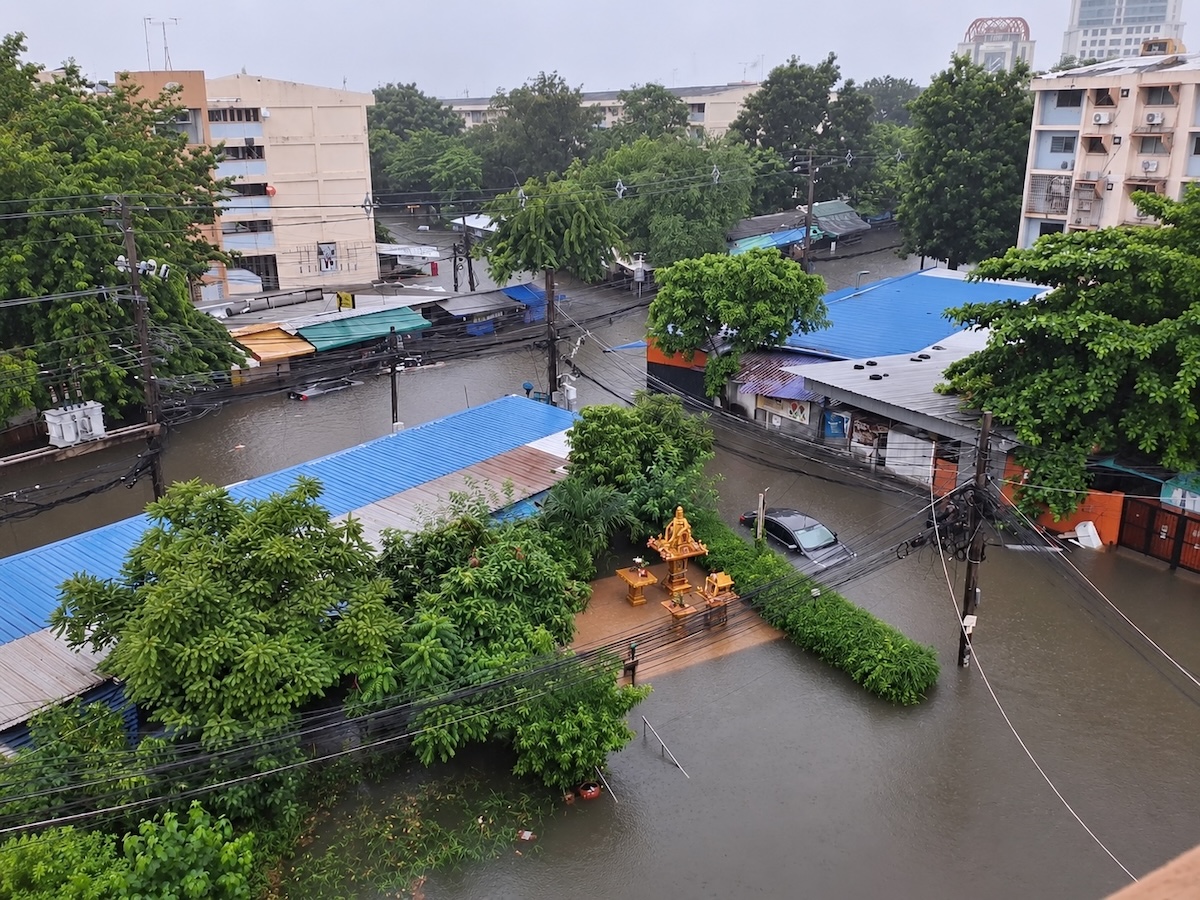
When several days of rain have already filled the canals, drainage becomes slower. This is one of the difficulties affecting eastern Bangkok around the Khlong Saen Saep and Khlong Prawet Burirom canal systems.
A new downpour can therefore quickly cause water to accumulate again, even in an area where levels had already started to fall. High tides can also slow drainage in some areas close to waterways.
For a better understanding of seasonal differences, our guide to the weather in Thailand explains climate patterns across the country’s main regions.
When will the Bangkok floods end?
It is impossible to give an exact date for a complete return to normal. On 29 September, authorities said that most major roads could dry relatively quickly if further heavy rain did not occur.
Low-lying areas such as Khlong Chan and Rom Klao may nevertheless take longer for the water to drain completely.
The weather remains the main uncertainty. The TMD forecasts a renewed increase in thunderstorms and locally heavy rain across the Bangkok Metropolitan Region on 5 and 6 October, which could temporarily slow the fall in water levels or cause new localised flooding.
Are the floods affecting all of Thailand?
No. Flooding is not affecting the whole country uniformly, and conditions vary considerably between provinces, districts and sometimes individual streets.
As of 29 September, the Department of Disaster Prevention and Mitigation was still reporting flooding in 29 provinces in addition to Bangkok. Water levels were rising in some provinces while conditions were improving elsewhere.
This does not mean that every tourist destination is affected. If you are travelling elsewhere in Thailand after Bangkok, check local conditions before leaving.
Travellers arriving soon may also find our guide to Thailand in October useful.
How can you follow the situation in real time?
To avoid outdated information or videos being shared out of context, prioritise official and local sources:
- the TMD forecasts for weather warnings;
- the TAT updates for traveller information;
- the BMA flood map for road water levels in Bangkok;
- the GISTDA map for a broader view of areas exposed to flooding;
- your airline for the exact status of your flight;
- your hotel for the latest conditions on the street immediately around the property.
For a broader overview of events that may affect a trip, you can also check our regularly updated guide to the current situation in Thailand.
Useful phone numbers during the floods
- 1155: Tourist Police;
- 1555: Bangkok Metropolitan Administration;
- 1669: medical emergencies;
- 1672: Tourism Authority of Thailand;
- 1722: Airports of Thailand;
- 1784: Department of Disaster Prevention and Mitigation;
- 1182: Thai Meteorological Department weather information.
Frequently asked questions about the Bangkok floods
Is Bangkok still flooded today?
Yes. Some parts of Bangkok remain flooded as of 1 October 2026, but conditions have improved significantly. The disaster designation has been lifted in 21 districts, while 29 remain affected. The main tourist areas remain accessible.
Can you travel to Bangkok right now?
Yes. Most tourist attractions continue to operate, while the BTS, MRT and main airport rail connections are running. Travellers should nevertheless check local conditions before road journeys.
Are the BTS and MRT operating during the floods?
Yes. The BTS Skytrain and MRT are operating, as are the Airport Rail Link and Red Line. They are generally among the most reliable options when some roads are congested or flooded.
Are Bangkok’s airports closed?
No. Suvarnabhumi and Don Mueang remain open and operational. Thai Airways is, however, still experiencing cancellations, schedule changes and baggage delays on some services.
Which parts of Bangkok are still most affected?
Problems persist mainly in some parts of eastern and north-eastern Bangkok. Ram Inthra, Khlong Chan and Rom Klao were still among the heavily flooded areas in the latest assessments, while Sai Mai, Khlong Sam Wa and Nong Chok are being closely monitored near certain canals.
Should you cancel a trip to Bangkok because of the floods?
There is currently no general need to cancel. Your decision should mainly depend on the location of your accommodation, your transport arrangements, your flight and the conditions expected on the exact dates of your stay.
Could Bangkok flood again?
Yes. Although water levels are falling overall, further showers can cause new localised flooding. The TMD forecasts an increased risk of thunderstorms and heavy rain in Bangkok on 5 and 6 October.
Are Phuket, Chiang Mai or Koh Samui affected by the floods?
Conditions are not uniform across Thailand. Several provinces remain affected by flooding, but this does not mean that every major tourist destination is affected. Check local conditions for your next destination shortly before travelling.
How can you tell whether a road in Bangkok is flooded?
The Bangkok Metropolitan Administration provides an online map showing measured water levels on Bangkok roads. Check it immediately before travelling, as conditions can change quickly after heavy rain.
In summary
Conditions are improving significantly in Bangkok, which remains largely accessible to travellers. The BTS, MRT, Airport Rail Link, Red Line and both Suvarnabhumi and Don Mueang airports remain operational.
Flooding nevertheless persists in some areas, Thai Airways is still experiencing disruption and another period of heavier rainfall is possible on 5 and 6 October. Over the coming days, prioritise rail services and check the weather, road conditions and your flight immediately before travelling.
This article is updated as conditions change.
🔄 Last updated on October 1, 2026