Visakha Bucha in Thailand is one of the country’s most important Buddhist holidays. It commemorates three major events in the life of the Buddha: his birth, enlightenment, and passing into parinirvana.
Each year, this religious holiday is marked by temple ceremonies, candlelit processions, offerings, meditation, and a day of reflection observed across the country.
Visakha Bucha 2026 at a glance:
- Date: Sunday, May 31, 2026
- Observed public holiday: Monday, June 1, 2026
- Main places: Buddhist temples throughout Thailand
- Rituals: offerings, meditation, prayers, and candlelit processions
- Good to know: alcohol sales are in principle banned in Thailand on the day of the religious celebration, with possible exceptions depending on current rules and authorized venues
What Is Visakha Bucha?
Visakha Bucha is a Buddhist holiday celebrated on the full moon of the sixth lunar month. It honors three essential events in the life of the Buddha: his birth, his enlightenment, and his passing into parinirvana.
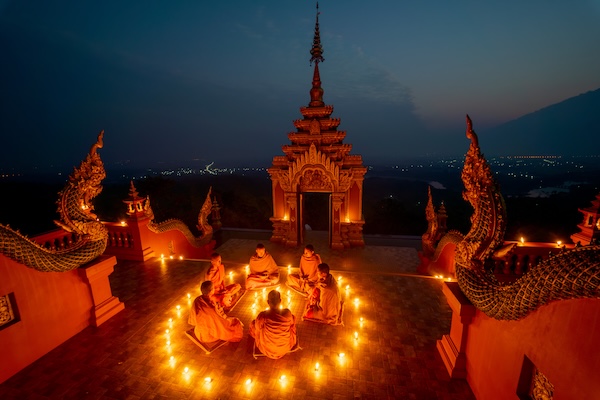
In Thailand, this day is considered one of the most sacred dates in the Buddhist calendar. Many people visit temples to make offerings, listen to monks’ teachings, meditate, and join evening candlelight processions.
For broader context on how this celebration relates to Buddhist traditions around the world, you can read this article about Buddha’s Birthday.
Origin and Meaning of Visakha Bucha
What does “Visakha” mean?
The name “Visakha” refers to the lunar month of Vaisakha, a term found in ancient Pali and Sanskrit traditions. In Buddhism, this period is associated with the commemoration of major events in the life of the Buddha.
An ancient Buddhist celebration in Thailand
The celebration of Visakha Bucha in Thailand dates back several centuries. It is commonly associated with the spread of Theravada Buddhist traditions, including influences from Sri Lanka, especially during the Sukhothai period.
Over time, Visakha Bucha became an important part of Thailand’s religious calendar. It highlights key Buddhist values such as compassion, meditation, moral discipline, and respect for the teachings of the Buddha.
International recognition
Visakha Bucha is closely related to Vesak, which is celebrated in many Buddhist countries across Asia. In 1999, the United Nations recognized Vesak as an international observance, acknowledging the role of Buddhist teachings in promoting peace, tolerance, and dialogue between cultures.
Visakha Bucha 2026 Date in Thailand
The date of Visakha Bucha changes every year because it follows the lunar calendar. In 2026, Visakha Bucha falls on Sunday, May 31.
Because the holiday falls on a Sunday, the observed public holiday is Monday, June 1, 2026. Government offices, schools, and many public services may be closed on that day.
To better understand how the lunar calendar shapes major Thai celebrations, you can read our guide to the Thai calendar.
A solemn public holiday
Visakha Bucha is a religious public holiday in Thailand. The atmosphere is generally quieter than during major popular festivals such as Songkran or Loy Krathong. Many Thai Buddhists use this day to visit temples, make donations, and observe Buddhist precepts.
In some areas, bars and entertainment venues may close or adjust their opening hours. If you are traveling in Thailand during this period, it is best to check local rules in advance.
Visakha Bucha Traditions and Ceremonies
Morning offerings
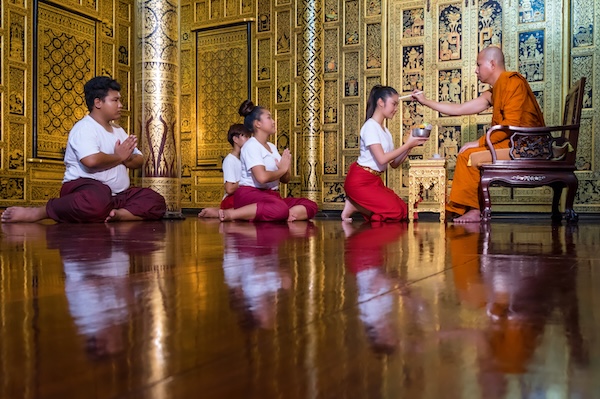
At sunrise, many people visit temples to offer rice, fruit, water, flowers, incense, or other goods to monks. These offerings are a way to make merit, an important concept in Thai Buddhist practice.
Temples also hold prayers, sermons, and meditation sessions. Some practitioners choose to wear white or modest colors as a sign of respect.
The Wian Tian candlelight procession
In the evening, the most visible ceremony is the Wian Tian procession. Participants walk three times around the main temple hall, usually holding a candle, incense, and lotus flowers.
The three rounds symbolize respect for the Three Jewels of Buddhism: the Buddha, the Dharma, meaning his teachings, and the Sangha, the monastic community.
If you are interested in candle ceremonies in Thailand, you may also enjoy our guide to the Ubon Ratchathani Candle Festival.
Regional traditions
Some regions organize special events around Visakha Bucha. In Chiang Mai, for example, pilgrims may join a nighttime walk to Wat Phra That Doi Suthep, one of the most important temples in northern Thailand.
In other provinces, temples may organize talks, exhibitions, group meditation sessions, or charitable activities. Practices vary from place to place, but the general focus remains on merit-making, meditation, and respect for Buddhist teachings.
Restrictions and Rules to Know
Alcohol sales during Visakha Bucha
During Visakha Bucha, alcohol sales are in principle banned in Thailand on the day of the religious celebration. Exceptions may exist depending on current regulations, authorized venues, or specific zones.
Because rules can change, it is best to check locally before buying or consuming alcohol on this day, especially in hotels, airports, tourist areas, bars, restaurants, and entertainment venues.
Recommended behavior in temples
Visakha Bucha is a religious day. Visitors are expected to behave respectfully, especially inside temples and during ceremonies.
- Wear modest clothing that covers shoulders and knees.
- Remove your shoes before entering religious buildings.
- Avoid speaking loudly or disturbing prayers.
- Ask permission before photographing monks or worshippers.
- Do not point your feet toward a Buddha image.
Buddhist Values Associated with Visakha Bucha
The Five Precepts
For many practitioners, Visakha Bucha is a time to renew their commitment to the Five Precepts of Buddhism. These principles encourage people to avoid killing, stealing, lying, sexual misconduct, and intoxicants that cloud the mind.
Even for non-Buddhist visitors, the day offers a way to better understand the importance of self-discipline, kindness, and restraint in Thai Buddhist culture.
Meditation and merit-making
Meditation plays an important role during Visakha Bucha. Temples often provide time for reflection, listening to teachings, and silent practice.
Merit-making is also central to the day. Donating, helping others, observing the precepts, and taking part in ceremonies are seen as ways to cultivate good actions.
Where to Experience Visakha Bucha in Thailand
You can observe Visakha Bucha in almost any Buddhist temple in Thailand. Some places are especially known for their ceremonies, religious importance, or large gatherings.
- Wat Phra Kaew in Bangkok: one of the most important temples in Thailand, located within the Grand Palace complex.
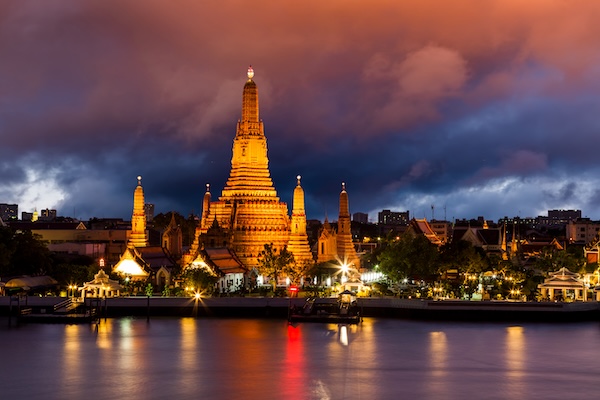
- Wat Arun in Bangkok: an iconic riverside temple on the Chao Phraya River, often visited in the late afternoon or evening.
- Wat Phra That Doi Suthep in Chiang Mai: a major temple in northern Thailand, associated with religious walks and ceremonies.
- Phutthamonthon in Nakhon Pathom: a large Buddhist park often used for collective ceremonies and meditation gatherings.
Tips for Attending Visakha Bucha
Visitors can attend Visakha Bucha ceremonies as long as they respect the religious setting. You do not need to be Buddhist to observe the rituals or quietly take part in some activities.
It is recommended to arrive early, especially at popular temples. In the evening, during the Wian Tian procession, avoid blocking worshippers and follow the movement calmly if you choose to join.
Small offerings, such as flowers, candles, or incense, can often be bought near temples. If you are unsure what to do, observe local worshippers or ask temple staff for guidance.
Frequently Asked Questions about Visakha Bucha
When is Visakha Bucha in Thailand in 2026?
In 2026, Visakha Bucha falls on Sunday, May 31. The observed public holiday is Monday, June 1, 2026.
What does Visakha Bucha celebrate?
Visakha Bucha commemorates three major events in the life of the Buddha: his birth, enlightenment, and passing into parinirvana.
Can visitors attend Visakha Bucha ceremonies?
Yes. Visitors can attend ceremonies in many temples, provided they dress modestly, behave respectfully, and avoid disturbing prayers or processions.
Is alcohol banned during Visakha Bucha?
During Visakha Bucha, alcohol sales are in principle banned in Thailand on the day of the religious celebration. Exceptions may exist depending on current regulations, authorized venues, or specific zones, so it is best to check locally.
What should I wear to a temple on Visakha Bucha?
Wear modest clothing that covers your shoulders and knees. White or light-colored clothing is often preferred, but the most important point is to dress respectfully.
Visakha Bucha in Thailand: A Major Buddhist Holiday
Visakha Bucha is one of the most important religious holidays in Thailand. It highlights key Buddhist teachings such as compassion, meditation, moderation, and respect for living beings.
For travelers, it is an opportunity to observe a more spiritual side of Thailand, away from the country’s better-known tourist festivals. By respecting local customs, visitors can attend ceremonies, witness candlelight processions, and better understand the role of Buddhism in Thai society.
🔄 Last updated on May 10, 2026