Pad Thai history is closely linked to the story of modern Thailand. More than just a stir-fried noodle dish, Pad Thai reflects a period of national identity building, modernization, and culinary change.
This guide explores its origins, its characteristic flavors, and the best ways to enjoy it in Thailand, especially at street food stalls and local markets.
Pad Thai in 5 Key Points
- 🍜 An iconic dish: Popularized as part of Thailand’s modernization and national identity building.
- 🔥 Characteristic flavors: A mix of sweet, salty, tangy, and umami notes.
- 🦐 Many variations: With shrimp, chicken, tofu, or even glass noodles.
- A street food classic: Easy to find in streets, markets, and small local restaurants across Thailand.
- 💡 Practical tip: Ask for พิเศษ (phiset) if you want a special or larger portion.
Pad Thai History: What to Know Before You Try It
What exactly is Pad Thai?
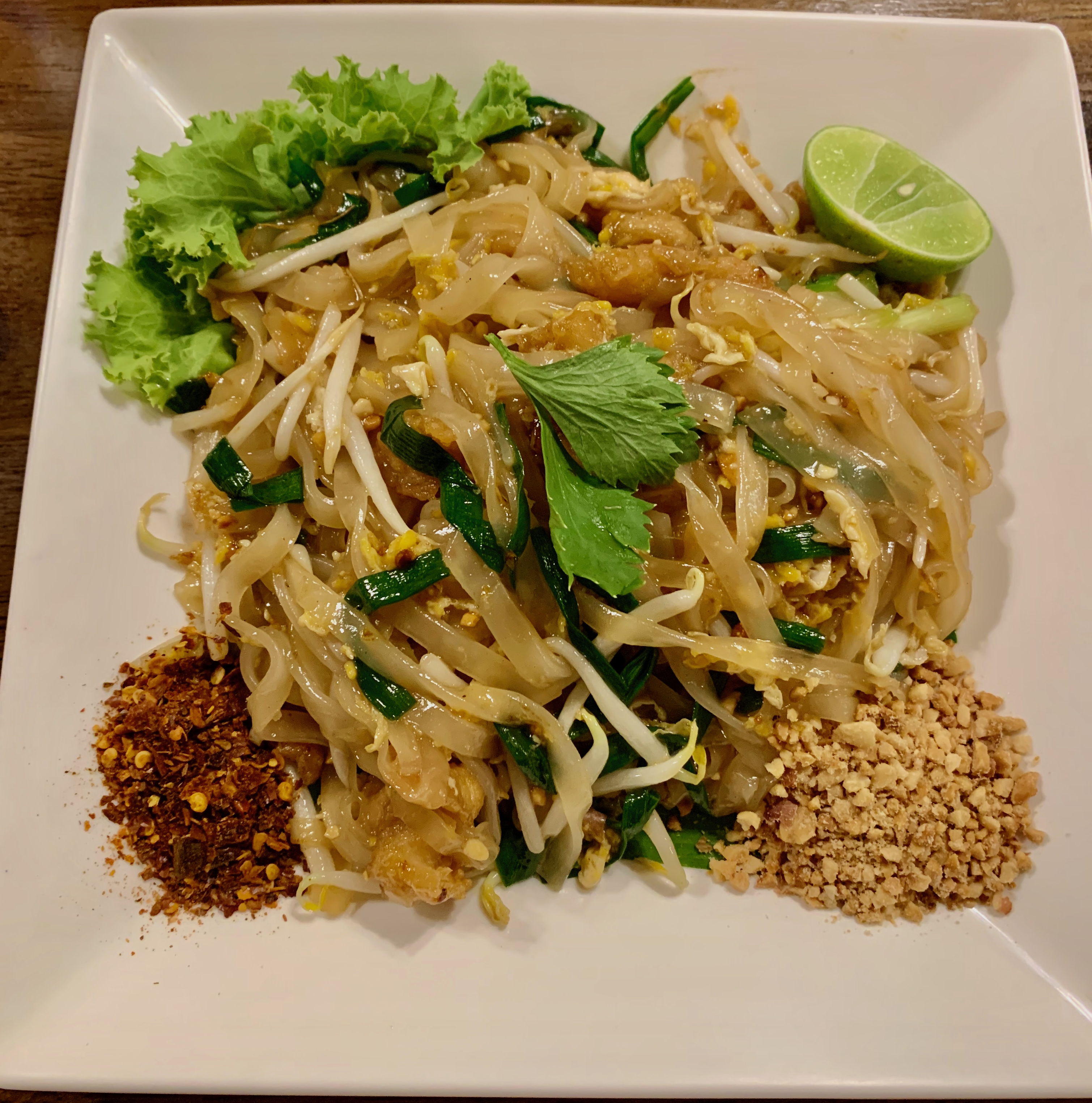
Pad Thai is one of the most famous dishes in Thai cuisine. It is made with rice noodles stir-fried in a wok with eggs, tofu, sometimes dried shrimp, and a sauce usually based on tamarind, fish sauce, and palm sugar.
It is typically served with crushed peanuts, garlic chives, fresh bean sprouts, and a wedge of lime.
What does Pad Thai taste like?
Pad Thai combines sweet, salty, and tangy notes, with umami depth from fish sauce and, in some versions, dried shrimp. It is usually not very spicy by default, but chili flakes are often served on the side so you can adjust the heat to your taste.
Where can you eat Pad Thai?
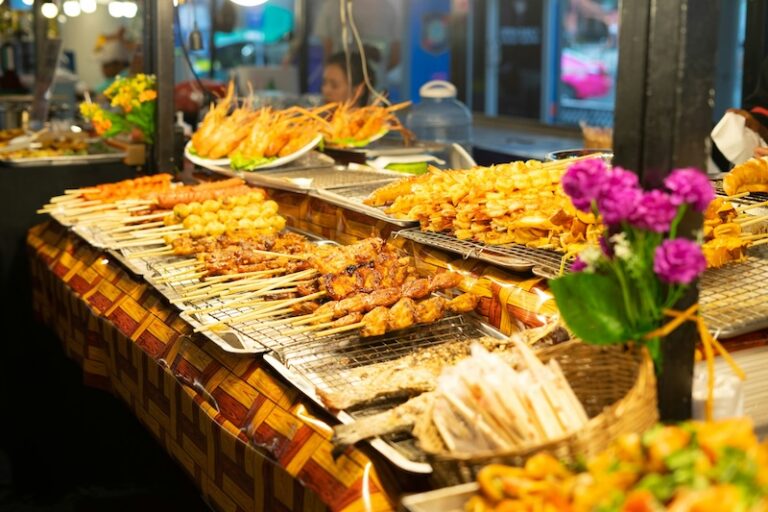
You can often find Pad Thai at street food stalls, night markets, and small local restaurants. Busy stalls with many Thai customers are usually a good sign: the dish is cooked quickly, and the ingredients are often used and replaced throughout the day.
The political origins of Pad Thai
Pad Thai is not only a culinary specialty. It is also closely linked to Thailand’s modern history. In the 1930s and 1940s, the country went through a period of national construction and modernization. The government encouraged cultural symbols that could help strengthen Thai identity.
Pad Thai fits into this context. Easy to prepare, affordable, filling, and based on local ingredients, it gradually became a popular dish associated with modern Thai cuisine.
To better understand the national context of this period, you can also read our complete guide to the history of Thailand.
Rice noodles had already been present in the region long before Pad Thai became popular, but the dish itself became strongly associated with this period of national identity building.
Pad Thai ingredients and preparation
Pad Thai relies on a balance between fresh ingredients, quick wok cooking, and a well-measured sauce. This combination gives the dish its recognizable texture and flavor. For quantities and cooking steps, follow our Pad Thai recipe.
The ingredients that make the difference
A good Pad Thai depends mainly on a few essential ingredients:
- Rice noodles: Medium-width flat rice noodles are usually used. They are soaked before cooking so they stay flexible without becoming mushy.
- Tamarind: It brings the tangy note that defines the dish. Tamarind paste or pulp is usually preferable to overly sweet ready-made sauces.
- Fish sauce: It provides the salty and umami depth found in many Thai dishes.
- Palm sugar: It softens the sauce and balances the acidity of the tamarind.
- Fresh garnishes: Bean sprouts, garlic chives, lime, and crushed peanuts are added at the end or served on the side.
Traditional preparation, in short
The rice noodles are first soaked, then quickly stir-fried in a wok with the sauce, tofu, eggs, and the chosen protein. The cooking should be fast and hot: the noodles need to absorb the sauce without becoming sticky.
The dish is served immediately, with the garnishes either on top or on the side. As is common in Thailand, each person can adjust the taste with lime, chili, sugar, or extra peanuts.
Common Pad Thai variations
Pad Thai exists in several versions depending on the region, the stall, and personal preferences:
- Pad Thai Goong: the shrimp version, one of the most common.
- Pad Thai Gai: a chicken variation.
- Tofu Pad Thai: a common option for those who prefer a meat-free version.
- Pad Thai Jay: a vegetarian or vegan-style version, usually without fish sauce or dried shrimp.
- Pad Thai Woon Sen: a version made with glass noodles, with a lighter texture.
Learn to cook Pad Thai in Bangkok
Try a hands-on Bangkok cooking class featuring Pad Thai alongside other Thai dishes. Check the menu for your chosen session.
My experience: a special Pad Thai in Pratumnak
During a walk through Pratumnak, in the Pattaya area, I found a small street food stall that became a regular stop. It is located at the entrance of Soi 5, near the 7-Eleven.
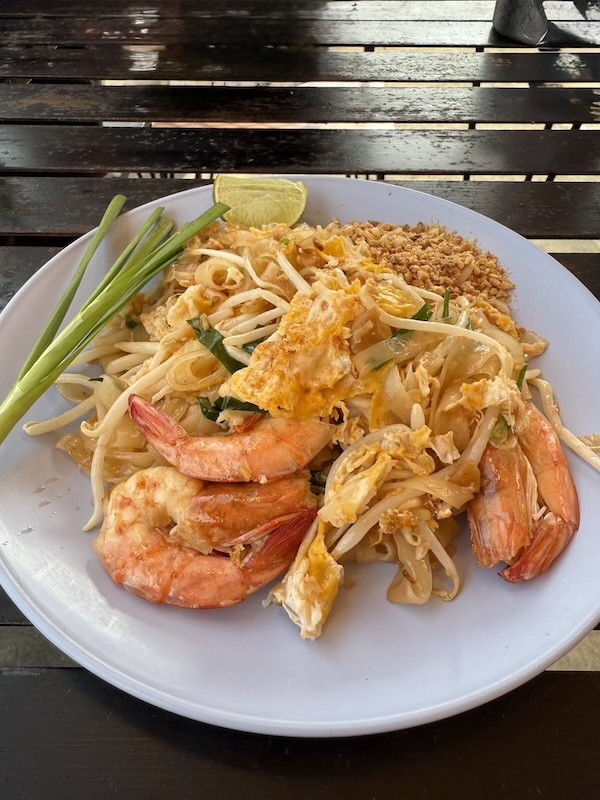
They serve a Special Pad Thai — ผัดไทยพิเศษ (Pad Thai phiset) — for 80 baht. The portion is larger, with more shrimp and an omelet wrapped around the noodles. It is a simple, filling version that reflects what you can find at some local street food stalls.
Pad Thai: a dish to try in Thailand
Pad Thai is now one of the best-known Thai dishes abroad, but in Thailand it remains above all a popular, accessible dish closely linked to street food culture.
Its success comes from its history, its simplicity, its quick preparation, and its easily recognizable flavors.
To continue exploring Thai food, discover our guide to must-try Thai street snacks, or learn how to order food in Thailand like a local.
Frequently Asked Questions about Pad Thai
What is the origin of Pad Thai?
Pad Thai was popularized in Thailand during the 1930s and 1940s, in a period marked by modernization, economic pressure, and national identity building.
Is Pad Thai a traditional Thai dish?
Pad Thai is now considered one of Thailand’s most iconic dishes, but it is not an ancient recipe in the strict sense. It became widely associated with Thai national identity during the 20th century.
What makes Pad Thai different from other noodle dishes?
Pad Thai stands out for its combination of rice noodles, tamarind-based sauce, fish sauce, palm sugar, egg, tofu, peanuts, lime, and fresh garnishes. The result is a mix of sweet, salty, tangy, and umami flavors.
Is Pad Thai spicy?
Pad Thai is usually not very spicy when served. Chili flakes are often provided separately, allowing each person to adjust the heat.
What does พิเศษ mean when ordering Pad Thai?
พิเศษ (phiset) means “special” in Thai. In food stalls and local restaurants, it usually refers to a larger or more generous portion.