Is cannabis legal in Thailand in 2026? Recreational use is illegal, and cannabis sales are restricted to a medical framework. Since June 26, 2025, Thailand has tightened its rules again, and in April 2026 the authorities went even further.
Cannabis in Thailand in 2026: key facts at a glance
- Recreational use: Illegal outside a medical framework since June 26, 2025.
- Buying cannabis flowers: Not allowed without a prescription (official Phor Thor 33 / PT33 form).
- General penalties: Up to 1 year in prison and a 20,000 baht fine, depending on the nature of the offense.
- Smoking in public: Punishable by up to 3 months in prison and a 25,000 baht fine.
- Medical use: Legal, but only with a mandatory medical prescription.
- Dispensaries: Remaining shops must follow strict medical rules, and the sector is moving toward a stricter medical framework.
- Derived products: Low-THC extracts remain more tolerated, but travelers should be very cautious about the actual composition of products.
Why has Thailand tightened cannabis rules again?
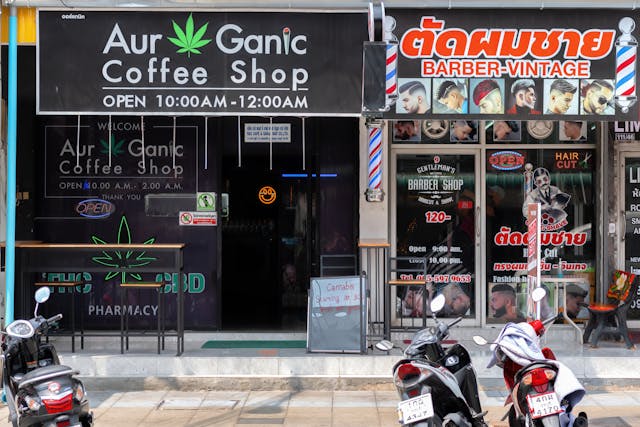
In June 2022, Thailand became the first country in Asia to remove cannabis from its narcotics list, paving the way for an unprecedented economic and tourism boom. Thousands of dispensaries appeared across the country and attracted visitors from around the world. However, that liberalization happened without a sufficiently robust legal framework to control its excesses.
The government justified its reversal by citing growing public health concerns, especially easier access to cannabis products, youth consumption, and the lack of effective control over sales. Political considerations also played an important role in this policy shift.
From a strictly legal perspective, this is not a simple return to the pre-2022 situation. Cannabis has not been reclassified exactly as it was before as a Category 5 narcotic. Instead, the government chose an intermediate route by classifying the plant as a “controlled herb”, allowing it to ban recreational use while maintaining a very narrow framework for medical use.
Timeline of the law in brief
- Before June 2022: 🛑 Cannabis was illegal and classified as a narcotic.
- June 2022 – June 2025: 🌿 Partial decriminalization and rapid market expansion, with significant legal grey areas.
- Since June 26, 2025: ⚕️ Recreational use is once again illegal, and sales require a prescription.
- Since April 2026: 🏥 The government has pushed remaining cannabis shops toward a stricter medical framework.
Current cannabis law in Thailand: what applies today
The regulation that came into force on June 26, 2025 completely reshaped the legal landscape. The Thai government made its objective very clear: cannabis should be reserved for a strictly regulated medical use, and the era of cannabis-related recreational tourism should come to an end.
Cannabis is currently treated as a controlled herb under the Thai Traditional Medicine Protection and Promotion Act. At the same time, the Ministry of Public Health has continued tightening controls over production, distribution, and retail sales. In that broader context, traditional plant-based remedies and medical cannabis remain closely regulated.
| Aspect | 2022-2025 period | Current situation |
|---|---|---|
| Buying flowers | Available in many dispensaries, often with only an ID check | Not allowed without a prescription (PT33 / Phor Thor 33 form) |
| Use | Often tolerated in some private venues or lounges | Restricted to the medical framework, never in public, and not in shops outside supervised medical use |
| Sellers | Dispensaries, bars, tourist shops, and a very open market | Only authorized structures, with professional supervision and stricter requirements |
| Market direction | A market that was almost recreational in practice | Strict medical refocusing |
| Future of shops | Rapid multiplication of stores | Trend toward stricter medical structures when licenses are renewed |
Strictly medical use, only with a prescription
The central point of the current regulation is clear: any purchase of cannabis, especially flowers, requires a mandatory medical prescription. That prescription is standardized through the official Phor Thor 33 (PT33) form and must be issued by a doctor, a pharmacist, or a licensed traditional medicine practitioner. In practice, the amount dispensed generally corresponds to a limited treatment period.
The ban on recreational use and the penalties
Failure to comply with the regulation can lead to up to 1 year in prison and a 20,000 baht fine, depending on the nature of the offense. This may apply in cases such as illegal sale, possession outside the authorized framework, or non-compliant distribution.
In addition, smoking cannabis in public remains strictly prohibited. This can be prosecuted under public nuisance rules, with penalties of up to 3 months in prison and a 25,000 baht fine. These penalties are a reminder of how important it is to understand the current situation in Thailand before traveling.
👉 In practice, it is often simple mistakes that get travelers into serious trouble:
- ➤
“I’ll finish my stash at the airport”:
This is a very bad idea. Bringing cannabis to an airport or across a border can lead to serious criminal consequences. Never carry cannabis outside the strictly legal framework, and certainly not internationally.
- ➤
Smoking on your hotel balcony:
Even in accommodation, a complaint from a neighbor or from the property itself may be enough to trigger police intervention. The fine can reach 25,000 baht if the situation is treated as a public nuisance.
- ➤
The THC vape trap:
Double trouble. E-cigarettes are already problematic in Thailand, and a THC vape makes the legal risk even more serious.
- ➤
Assuming a tourist-facing seller must be legal:
Since the crackdown, many shops have closed or are in transition. A visible shop in a tourist area is not automatically compliant with the law.
An increasingly strict framework for professionals
For businesses in the sector, the constraints have become much heavier. Shops must justify the origin of their products, comply with tighter health requirements, and operate within a much stricter medical framework than before.
In April 2026, the Thai government confirmed its intention to go further: when licenses are renewed, retail outlets are expected to move toward a stricter medical framework, with qualified personnel on site. A transition period has been mentioned to allow some operators to adapt, but the message is clear: the old tourist cannabis shop model is no longer what the authorities want to preserve.
What about CBD and other cannabis-derived products?
The regulation mainly targets flowers and products rich in THC. Products with a low THC content, including some extracts and CBD-based products, remain in a more tolerated zone. However, extracts containing more than 0.2% THC remain classified as Category 5 narcotics. In practice, travelers should still be extremely cautious: labeling, actual composition, and legal compliance can be difficult to verify.
In other words, even if some derived products may seem more accessible than cannabis flowers, it is safer not to place too much trust in products marketed as “light,” “wellness,” or “non-psychoactive,” especially in opaque tourist retail channels.
Quality concerns: the risk of PGRs and chemical additives
Beyond the legal risk, a health concern often mentioned on the Thai market is the use of PGRs (Plant Growth Regulators), chemicals used to make cannabis buds artificially denser, heavier, and more visually appealing.
How can you spot them? A flower treated with PGRs may look unusually compact, have little natural aroma, and produce a harsher, more chemical-tasting smoke. For travelers, this adds yet another layer of risk: buying low-quality cannabis in an unclear legal environment is a very bad combination.
What does this mean for tourists and expats?
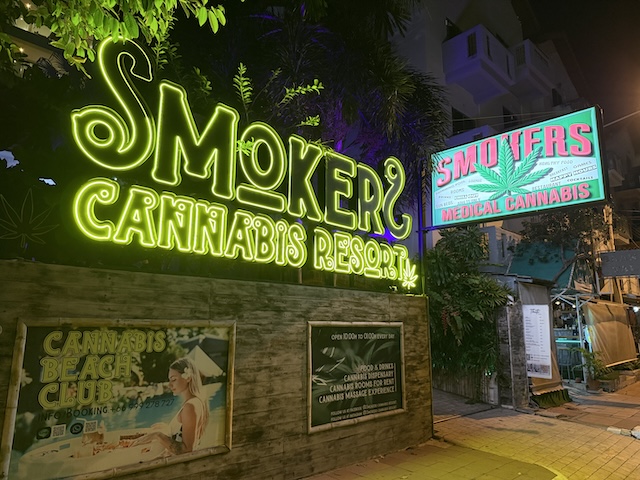
For travelers, the message is now very clear: the cannabis tourism era that followed 2022 is over. Buying cannabis on the street, in a questionable shop, or without a prescription is now an unnecessary legal risk. The chance of running into trouble is real, especially when public consumption, transport, or a non-compliant shop is involved.
It is therefore essential to prepare your trip carefully and respect all regulations, starting with Thailand’s entry requirements.
How can a tourist get a prescription in practice?
In practice, a traveler wishing to access cannabis legally must go through an authorized health professional in Thailand: a doctor, a licensed pharmacist, or an accredited practitioner of traditional Thai medicine. International hospitals and some private clinics in major cities remain the most credible access points.
Getting a prescription is never automatic. It depends on the practitioner’s assessment and on the medical framework applied. Conditions often mentioned in practice include insomnia, chronic pain, certain migraines, loss of appetite, and other cases the practitioner considers medically justified. For health-related concerns during your stay, you can also read our guide to travel health coverage in Thailand.
What is the future of Thailand’s cannabis market?
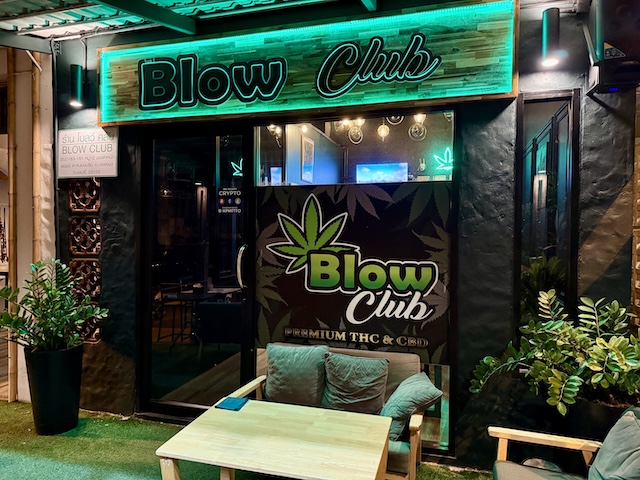
This policy reversal has hit an industry that grew very quickly after 2022. By late 2025 and early 2026, thousands of outlets had already disappeared or failed to renew their licenses. The market has contracted sharply.
The new phase that began in April 2026 confirms the direction taken by the authorities: the remaining outlets are no longer meant to operate as simple retail stores, but to move toward a stricter medical framework, with qualified staff and a care-based logic.
In other words, Thailand’s cannabis market is not disappearing entirely, but it is changing in nature. The model now favored by the authorities is no longer one of tolerated recreational use in tourist areas, but one of strictly medical cannabis, regulated and much harder for an ordinary traveler to access.
In practice, Thailand still operates under a hybrid and evolving regulatory framework. A fully stabilized, all-encompassing law has not yet clarified every practical scenario, which is one more reason for both tourists and expats to remain cautious.
Is cannabis legal in Thailand?
Yes, but only within a strict medical framework. For travelers, that means Thailand should no longer be seen as a recreational cannabis destination. Since June 2025, non-prescription use has once again become illegal, and since April 2026, the authorities have reinforced their intention to reserve the market for medically supervised structures.
The key takeaway is simple: do not buy cannabis without a prescription, never smoke in public, and never carry cannabis to an airport or abroad. The time for experimentation is over. What matters now is strict compliance with a much tougher legal framework. For official guidance, read Thailand’s official cannabis rules for tourists before your trip.
FAQ: frequently asked questions about cannabis in Thailand in 2026
Can you still smoke cannabis in Thailand in 2026?
Not for recreational purposes. In 2026, cannabis use is restricted to a strict medical framework, with a prescription. Even then, smoking in public remains prohibited.
What are the penalties for illegal possession or use?
Penalties can reach up to 1 year in prison and a 20,000 baht fine for certain violations of the regulation. Smoking in public can also lead to up to 3 months in prison and a 25,000 baht fine.
How can a tourist obtain cannabis legally?
The only legal way is to obtain a medical prescription from an authorized professional in Thailand, then buy from a structure operating within the current medical framework.
Are cannabis dispensaries still open?
Yes, some are still open, but the sector has shrunk dramatically. In 2026, the authorities are pushing the remaining businesses toward a stricter medical framework rather than a simple retail shop model.
Can you take cannabis bought in Thailand back to your home country?
Absolutely not. International transport of cannabis is illegal and can lead to very serious consequences. The same applies if you want to avoid trouble with vaping in Thailand.