Koh Samui offers a rare balance of lifestyle appeal and investment potential. Yet, the tropical dream often hits a complex legal reality.
Unlike in the West, Thai law offers little automatic protection to foreign buyers, and risky practices are common.
This article is not here to sell you a villa. Its goal is to reveal the keys that many agents “forget” to mention. Here are the realities of buying property in Koh Samui in 2026.
Why Koh Samui Attracts Foreign Buyers
Beyond beaches and palm trees, Koh Samui benefits from several structural advantages that continue to attract international investors:
- Unique accessibility: Samui is the only island of its size in Thailand with a privately operated international airport, ensuring year-round connectivity and a steady flow of higher-spending visitors.
- Mature infrastructure and services: International schools and high-quality private hospitals, including Bangkok Hospital Samui, make long-term residence viable and comfortable.
- A villa-driven market: Unlike Bangkok’s condominium-focused market, Samui is dominated by private villas with pools—particularly attractive to post-Covid buyers seeking space, privacy and flexibility.
Important residency note:
Property ownership does not grant the right to reside in Thailand. Before planning a purchase, review long-term visa options such as Thailand Elite, LTR or Retirement visas.
Buying Property in Koh Samui: Ownership Rules for Foreign Buyers
This is often the first major surprise for buyers:
Foreigners cannot legally own land in Thailand in their personal name. This rule is strict and consistently enforced.
Land Ownership vs Building Ownership
There is, however, a critical distinction.
While foreigners cannot own the land, they can legally own the building constructed on it. This ownership must be properly registered at the Land Office and clearly separated from land rights.
Why Most Foreign Buyers Are Not “Owners” in the European Sense
To work around land ownership restrictions, two main legal structures are commonly used. Neither is perfect, and both involve trade-offs that must be fully understood before proceeding.
Legal Structures Used in Koh Samui (and Their Risks)
1. Leasehold (30-Year Land Lease)
This is the simplest and most legally secure structure for foreigners.
You lease the land for 30 years, with the lease registered at the Land Office. This gives you enforceable rights for the duration of the lease.
The common trap:
Many agents advertise “30 + 30 + 30 years” (90 years total). In reality, only the first 30 years are guaranteed by law. Renewal clauses are private contractual promises—not automatic legal rights. If the landowner sells the land or passes away, renewals may become complicated or unenforceable.
2. Thai Company Structure
Some buyers prefer a Thai limited company to “control” the land.
Since Thai companies are allowed to own land, the company—not the individual—purchases the property.
Major legal risk: nominee shareholders
Thai law requires that 51% of company shares be held by Thai nationals. When Thai shareholders act only as “nominees”… the structure may be deemed illegal if its sole purpose is to circumvent land ownership laws.
Authorities are increasingly scrutinising such setups. Improper structures may lead to company dissolution and loss of control over the asset.
Leasehold vs Thai Company: Comparison
| Criteria | Leasehold (30 Years) | Thai Company |
|---|---|---|
| Legal clarity | Fully legal | Grey area if nominees used |
| Duration | 30 years guaranteed | Theoretically unlimited |
| Setup cost | Low | High (company + annual compliance) |
| Main risk | Lease non-renewal | Legal challenges & dissolution |
Common Mistakes Buyers Regret Afterward
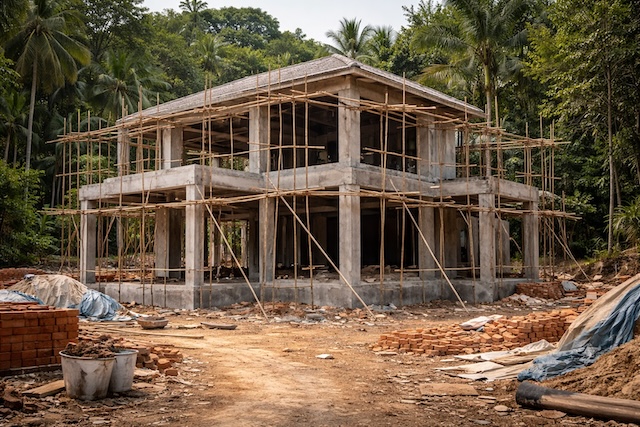
Purchasing under emotional pressure—often during a holiday—is one of the most frequent and costly mistakes.
Typical scenario observed in Koh Samui:
A couple purchases an off-plan villa for €400,000, based on a promised 10% rental return.
Two years later:
- Construction is delayed by over 12 months
- Finishing quality is below expectations
- Rental management fees reach 20–30% plus VAT
- Actual occupancy averages 40%, not the projected 70%
Outcome: operational costs are barely covered, far from the expected profit.
Many of these situations are not isolated cases. Similar patterns can be found in common scams in Thailand, where foreign buyers are frequently exposed to misleading promises, unclear legal structures or high-pressure sales tactics.
Results vary by property, but this pattern is unfortunately common with poorly structured off-plan purchases.
Frequently Overlooked Costs
- Sinking fund: shared repair reserves in managed developments
- Pool and garden maintenance: often €100–200 per month
- Electricity pricing: sometimes resold above government rates
- International transfer and currency exchange fees: which quietly erode returns
Important: Banking and transfer issues are common for foreign buyers. Read our detailed case study on frozen bank accounts in Thailand.
Rental Returns: Myths vs Reality (2026)
Can property in Koh Samui generate income? Yes. Is it easy? No.
The short-term rental market is highly competitive. Consistent performance requires prime location (often sea view), distinctive design, and professional hospitality-level management.
You must also factor in seasonality. Occupancy rates can drop significantly during the rainy season in Thailand, which directly impacts your annual yield calculations.
Be cautious of “guaranteed returns” of 7–10%. These often involve inflated purchase prices designed to pay back part of your own capital.
Realistic net returns today: 4–6%, including limited personal use.
Due Diligence: The Non-Negotiable Step
Never sign a reservation agreement—or transfer a deposit—without independent legal due diligence.
Your lawyer must be independent from the agent or developer and should verify the land title (Chanote), confirm zoning compliance, and review access rights and construction permits.
💡 Golden rule
Never use the lawyer recommended by the seller. Independent legal review typically costs around €1,000—and can prevent six-figure losses.
The Chanote Title: Why It Matters

The Chanote (red Garuda) is the strongest land title in Thailand. It guarantees precise boundaries, full ownership rights and proper registration at the Land Office.
According to the official Thailand Land Department, only Chanote titles provide full legal ownership and clearly defined land boundaries.
Many properties are sold on weaker titles or usage rights—an unacceptable risk for most foreign buyers.
Buyer Survival Checklist
- Land title: Chanote only
- Legal road access: no informal or private crossings
- Zoning compliance: restrictions vary by altitude and distance to the sea
- Building permits: must match the completed structure exactly
A Simplified Secure Purchase Process
- Define budget, location and objectives
- Shortlist a maximum of 2–3 properties
- Negotiate price and transfer taxes
- Reservation with protective clauses
- Independent legal due diligence
- Final contract (SPA) approval
- Registration at the Land Office
Looking for a Reliable Local Contact?
I am not a real estate agent and do not participate in transactions. My role is strictly informational.
However, if your project is well-defined and you wish to speak with established professionals who understand foreign buyer constraints, I may be able to suggest reliable contacts.
To ensure relevance, please specify:
- approximate budget
- purchase timeframe
- primary objective (investment, retirement, mixed use)
Contact: Email me here
Disclaimer: This article is for informational purposes only and does not constitute legal or financial advice. Thai laws and enforcement practices evolve. Always consult a licensed, independent professional before investing.
🔄 Last updated on February 6, 2026