Are flights to Southeast Asia being cancelled or delayed right now? Many travelers are asking this question as tensions in the Middle East continue to disrupt air traffic. Flight routes to Southeast Asia are being altered or delayed due to airspace closures, causing concern among passengers planning their trips. Some travelers are already experiencing long layover delays or last-minute itinerary changes.
Short answer: Flights to Southeast Asia are not cancelled overall. Most routes are still operating, but delays and itinerary changes are common, especially via Middle Eastern hubs.
🔄 Update (March 19, 2026):
The situation remains highly disrupted but is gradually reorganizing. Since late February, the crisis has led to the cancellation or modification of over 14,000 global flights, according to several industry estimates. While direct Europe-Asia flights are operating normally as of mid-March 2026, connections via the Middle East (Doha, Dubai, Abu Dhabi) remain the most exposed to delays, last-minute modifications, and occasional cancellations. A fare increase of 15% to 25% is also being observed on the most sought-after alternative routes. 👉 See the impact by destination below.
Do you have a flight scheduled in the coming weeks? Here is a complete overview to help you understand how these disruptions might impact your final destination.
Why are flights to Southeast Asia disrupted?
Tensions in the Middle East and airspace closures (notably over Iran and Iraq) are forcing many airlines to alter their routes to Asia.
Over the past few weeks, the aviation industry has been constantly adapting to avoid the affected areas. The traditional Europe-Asia corridor via the Gulf is severely impacted.
In practical terms, this situation leads to:
- Longer flight times as planes bypass risk zones via alternative air corridors.
- Complex logistics for crew rotations and fuel management.
- A “domino effect” at airports: Late arrivals of international flights from Europe lead to congestion for connecting flights in Asian hubs (Bangkok, Kuala Lumpur), sometimes leaving travelers stranded while waiting for a new regional flight.
Which airlines are most affected?
The situation varies greatly depending on the airline you choose to travel to Asia. Adaptation strategies differ:
- Gulf carriers (Emirates, Qatar Airways, Etihad): Located at the heart of the tensions, they operate with high volatility. Some are attempting to gradually rebuild their flight capacities, while others maintain adjusted schedules to Southeast Asia with strict transit rules.
- European airlines (Air France, KLM, Lufthansa): Faced with the risks, these major groups have largely suspended their flights to the Middle East. For their direct flights to Asia, they are forced to take wide detours around closed airspaces, which significantly extends travel times.
- Asian airlines (Singapore Airlines, Air India…): They are also affected on their westbound routes. For example, Singapore Airlines had to drastically reduce its flights to the Middle East, but is trying to compensate by increasing its direct flights to Europe.
- Turkish Airlines: Its Istanbul hub (located further north) is generally less impacted, often offering a more stable alternative route, although highly sought after.
Which flight routes should you avoid or choose right now?
If you need to book a ticket to Asia in the coming days, choosing the right itinerary is crucial to minimize the risk of disruption:
- ✅ Best choice: Direct (non-stop) flights Europe–Asia.
- ✅ Reliable: Connections in Asia (via Singapore, Bangkok, or Taipei).
- ✅ More stable: Layovers via the north (Istanbul).
- ⚠️ Variable: Connections via Abu Dhabi.
- ❌ Most exposed: Connections via Doha and Dubai (frequent delays and last-minute changes).
Note: These trends may change quickly depending on the geopolitical situation. Airlines may adjust routes or schedules with little notice.
Impact by major Southeast Asian destination
Thailand: Flights are operating, but watch your connections
Thailand is not directly affected by the conflict and remains perfectly safe. The vast majority of flights to Bangkok or Phuket continue to operate normally. However, itineraries passing through Gulf hubs are highly vulnerable to delays and flight path adjustments.
👉 Full analysis: Read our detailed update on flight cancellations to Thailand
Vietnam & Cambodia: High reliance on the Middle East
Flights to Hanoi, Ho Chi Minh City, or Phnom Penh frequently transit through Doha or Dubai. At the beginning of the conflict, several planes arriving from the Middle East experienced severe disruptions. The detours imposed today significantly extend travel times and disrupt short layovers.
Indonesia (Bali): Increased impact on ultra-long-haul flights
Traveling to Bali already involves very long flights from Europe (often exceeding 16 hours). Detours caused by airspace closures further extend this duration and lead to major operational adjustments, such as prolonged layovers for refueling.
Practical tip: If your layover is less than 2 hours, the risk of missing a connecting flight increases significantly in the event of a delay on your first leg.
Singapore: A major reorganization of flights
Changi Airport (Singapore) is adapting to the crisis. While flights connecting Singapore to the Middle East have faced cancellations, direct flights to Europe operated by Singapore Airlines have been reinforced to bypass the issue. Direct flights or those transiting via East Asia remain an excellent alternative if you have yet to book your ticket.
What are your rights in case of cancellation or delay?
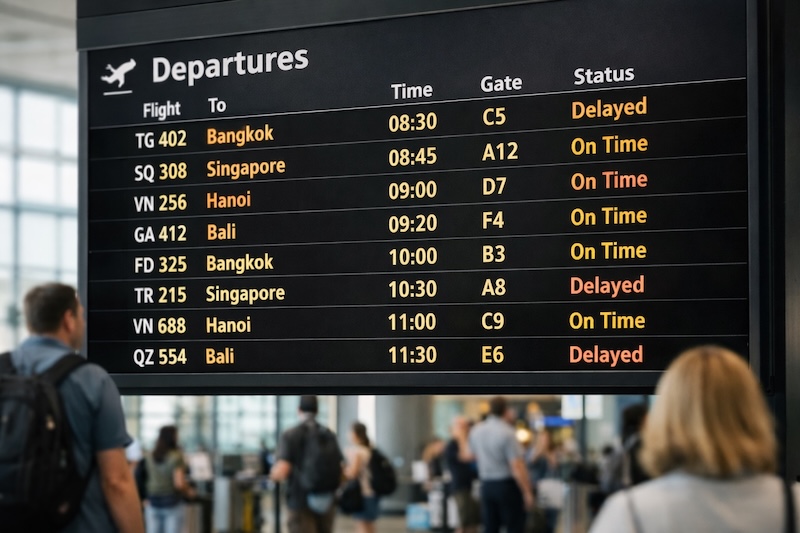
In the event of a flight cancellation, the airline has a legal obligation to offer you either a full refund or rerouting to your destination in Asia on the next available flight.
If your flight falls under the European EU261 passenger rights regulation (departing from the EU or operated by a European airline arriving in the EU), note that a sudden airspace closure due to a conflict is considered an “extraordinary circumstance”. This means the airline will likely not pay you the standard financial compensation (€600). However, they must still provide care and assistance (meals, hotel, transfers) if you are stranded during a layover.
🛡️ Check your insurance coverage
In case of prolonged delays or unforeseen cancellations, not all credit card insurances cover situations related to a conflict. Take a few minutes to review the “war / hostilities” clauses of your policy before departure.
👉 Check out our travel insurance comparison for Asia.
Should you be worried about your trip?
In summary, Southeast Asia remains highly accessible and airlines are constantly adjusting their flight plans to ensure absolute passenger safety. The disruptions are logistical in nature (longer flights, difficult connections). If your flight is maintained by the airline, there is generally no reason to cancel your trip on your own accord.
Since the situation can evolve rapidly, always check the status of your flight directly with the airline (not your agency) before heading to the airport.
FAQ: Key takeaways
Will ticket prices for Asia increase?
Yes, the increase is already visible. As of mid-March 2026, fares on some highly sought-after alternative routes (bypassing the Middle East) have increased by 15% to 25%. Longer journeys, which require more jet fuel, combined with a reduction in the supply of flights via the Gulf, mechanically push prices upward.
Is it dangerous to travel to Asia right now?
No, Southeast Asia remains perfectly safe and open to tourism. The current issue is purely logistical and confined to Middle Eastern airspace. Airlines apply strict safety protocols and completely avoid risk zones. For peace of mind before departure, check your destination’s specific status on the US State Department Travel Advisories.
Can I cancel my flight without fees as a precaution?
No. If your flight is maintained by the airline, the mere fear of delays or the geopolitical situation does not constitute valid grounds for a refund. You will lose the amount of your ticket unless you have purchased specific “Cancel for Any Reason” insurance. Do not make a hasty decision before checking the status of your flight.
🔄 Last updated on March 19, 2026